The Truth Revealed

Thursday, October 10, 2013

Mariam Mokhtar on the Imbecilic Home Affairs Minister


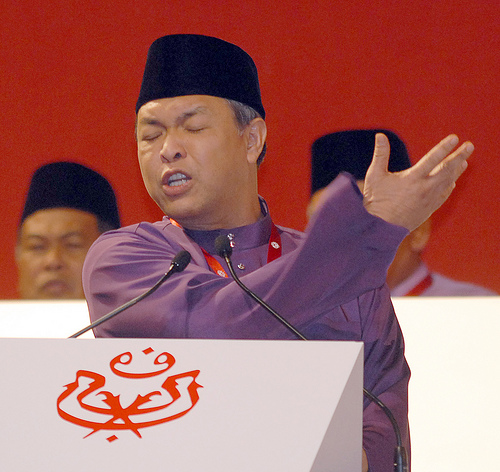
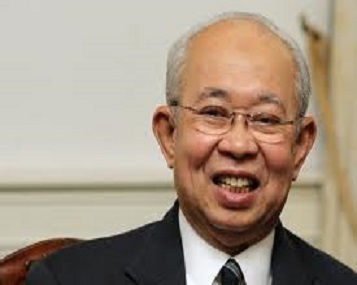
ZHHome Minister Ahmad Zahid Hamidi uses aggression to try to intimidate reporters, but he was hiding something behind the bully-boy mask which he wore at the press conference on Oct 4.
If Zahid thinks he can use his altercation with Malaysiakini to pursue an agenda which will curb press freedom, then he is seriously misguided.
It is amazing how much Zahid has changed in 15 years. At the UMNO-Baru assembly in 1998, Zahid attacked former PM Mahathir Mohamad for corruption, cronyism and nepotism. By 1999, he was practically eating out of Mahathir’s hands and referred to the then-premier’s remarks as “advice from a father to his son”. Then, he vowed to back the party leadership, but today he shows little concern for the way in which our money is mis-spent.
No one could accuse this writer of spinning; not with video footage showing Zahid bringing rudeness and thuggish behaviour to an art form. This is not the first incident of unbecoming behaviour from UMNO-Baru politicians, or their supporters, against members of the media.
A few months ago, Zahid was embroiled in a court case in which he was alleged to have assaulted a businessman. Zahid is better known for his idiocy, not powers of reasoning. His preferred mode of problem-solving is to threaten people and order those who are dissatisfied with the state of the country, to emigrate.
Zahid should realise that attributing the loss of the Police weapons to human error, is too glib. In all probability, neither he nor the Inspector-General of Police (IGP) knows what became of the weapons. If they have the information, then why are they withholding it?
Zahid and ReporterZahid started a running dialogue with Malaysiakini, when he should have been fielding questions from reporters. This diversionary tactic was a ruse to waste time.Having berated Malaysiakini, he made a hasty retreat, just like a coward. Zahid’s body language showed that he was keen to avoid further questioning.
UMNO-Baru spends hundreds of millions of ringgit on its elections and on foreign consultants to spruce up its image. Why does it not spend money for its politicians to attend classes in ethics, civility and good manners? How about educating their politicians to answer reporters’ questions properly?
As taxpayers, we want to know the measures the Home Ministry or the Royal Malaysian Police (PDRM) will take to stem further wastage. What specific forms of human error does Zahid think could account for the loss of the weapons?
Zahid claimed that none of the losses were from “a breach of trust, deviant acts or elements of bribery”. How does he know? Did someone file a police report and were detailed investigations conducted?
Zahid denied that carelessness and mistakes made in the line of duty were to blame. What exactly does he mean? If the system is at fault, then he should say what remedial steps he or the IGP will take to rectify the mess.
Carelessness and error?
In August, it was reported in a daily newspaper that a policeman’s pistol and ammunition had been stolen as he lay sleeping in his car, with his window wound down, in a lay-by in Shah Alam. It was odd that he had just returned from a funeral, carrying his gun, passport and lots of cash.
Is this the sort of carelessness and error Zahid referred to? Was this policeman punished? Did he sell his gun to a syndicate? How do we know either man is telling the truth?
Zahid’s curriculum vitae states that before venturing into politics, he worked for two banks, OCBC and Bank Simpanan Nasional. Any bank staff member will confirm that at the end of the month, every sen has to be accounted for and no one is allowed to leave the bank and return home, until the books are balanced. Zahid may not have started his banking career as a teller, but this practice is drummed into every bank employee.
The video clip of Zahid’s infantile and childish behaviour at the October 4 press conference shows him acting like the school bully in a playground. He is verbally aggressive and he knows he can use his powers as home minister to make reporters compliant.
His angry outbursts are a means of showing off. He attempts to shame anyone whom he accuses of doing something wrong. He is fiercely argumentative when anyone tries to make a point. He threatens to punish and tries to humiliate in public anyone with whom he argues. This is not spin, but is accurate reporting. Zahid is damned by his own words and actions.
Zahid likes reporters who publish only what Umno-Baru want them to say. Incredibly, UMNO-Baru is the only political party which bans Malaysiakini from covering its functions, especially its supreme council meetings. This action compromises freedom of speech.
Many people will have noticed the steady build-up, since GE13, of harsher laws. Mahathir came out of the woodwork to support stricter laws, claiming that the streets were no longer safe; not that he would know or care.
Zahid claims that amendments to the Prevention of Crime Act (PCA) will be used to punish criminals, but cynics suspect that these draconian provisions will be used to gag opposition politicians, activists and reporters. We appear to be returning to the bad old days of restricted freedom.
The amendments were forced through Parliament and Zahid would be foolish to think he can broaden this latest attack on Malaysiakini into an attempt to gag the media, but the indications are that he is heading that way.
A day after the attack on Malaysiakini journalist Lawrence Yong, Zahid was at a security seminar for community leaders in Malacca, where it was alleged that he had made “sensitive remarks”.
Zahid Ham
Upon the discovery of the presence of journalists, Zahid banned them from publishing what was discussed and he followed this with a threat that he would have their newspapers shut down. The audience booed the media representatives, who were then forced to retreat.
Would Zahid have dared to humiliate, finger-wag and slap the shoulders of a foreign correspondent? Perhaps, his rude behaviour is reserved for Malaysian reporters because he can gag them and punish them, with the laws at his disposal. A bully boy attracts loyalty by fear. If Zahid harbours ambitions of becoming Prime Minister, he should tread warily.

Saturday, October 5, 2013

Najib’s policy of spend and be damned

Mariam Mokhtar | October 4, 2013 
The auditor-general’s report simply confirms that the Prime Minister is not interested in stemming all the embezzlement from the treasury

COMMENT
When someone steals from you, it becomes a personal matter. It is of little consequence if the theft involves a small sum of money or larger amounts because your reaction is the same; you feel cheated, you want retribution, you seek justice and you demand the return of your money.

A few days ago, many people were alarmed by the 2012 Auditor-General’s report. Contrary to public opinion, the report is not about wastage. It is about theft which has been perpetuated by corrupt politicians and civil servants.

True, some of the money was probably wasted; but the bulk of the money went into the back-pockets of these men and women, who acted in tandem with unscrupulous traders. That money belongs to you.

Malaysia has charlatans and clowns, masquerading as politicians and civil servants. Putrajaya is notorious for its centralised control, and Umno Baru keeps many key civil servants under their yoke.

The 47% of the rakyat who voted BN at GE13, are devoted disciples of the party. They are in denial or are too dopey to accept that BN means a ‘Bankrupt Nation’ or ‘Barang Naik’. They keep springing to the defence of BN politicians and irresponsible civil servants, who steal from them, and who lack any accountability for their actions.

If the stolen money could be recovered, our youth might be able to receive free higher education, our senior citizens could benefit from free and improved health care, we might enjoy an efficient public transport system, or go about our business without fear of being victims of crime.

When BN politicians and civil servants stole from the public to enrich themselves, they left a huge dent in the nation’s finances. When Najib Tun Razak spent his way into GE13, he effectively emptied the treasury.
Let us consider some of the issues in the audit that BN loyalists have ignored. IGP Khalid Abu Bakar shot himself in the foot with his flippant response that the missing weapons had “fallen into the sea”.

Perhaps, the loss of 156 pairs of handcuffs and 29 vehicles by the police, costing taxpayers a staggering RM1.33 million had fallen off the back of a lorry?

The Department of Broadcasting had purchased 20 wall clocks for several RTM branches. Each clock cost RM3,810, although each one had an estimated value of RM100. Despite the expensive clocks, many civil servants are still working to Malaysian Rubber Time.

The audit created a side-show when a public spat erupted between Youth Minister Khairy Jamaluddin and Communications minister Shabery Cheek, over the funding for a K-Pop concert, held last year.

Shabery said the money had come from sponsors, but Khairy contradicted him and said that his ministry picked up the tab when the sponsors withdrew from the deal. Who is lying – the Auditor–General, Khairy or Shabery?

Naturally, for a concert of this magnitude, contracts would have been signed, with severe penalties for breaching the terms of the agreement. It is highly likely that if a crony company had been involved, only a loose, non-binding verbal arrangement would suffice between friends. Could this explain why there were no consequences, when the sponsors withdrew?

Najib’s split personality

We would lose our homes, or cars, if we defaulted on our mortgage or hire-purchase payments. You don’t need to go to Oxford University to know about contracts and binding agreements. You only need common sense and good moral values to know that you have to be responsible with taxpayer’s money.

In the last few days, President Obama cancelled his trip to Asia because his government had limited funds from the US shutdown.

If there was no money, why wasn’t the vulgar K-pop concert, which we know was only a crowd-puller to make people vote BN in GE13, cancelled?

Last week, Najib told an audience in San Francisco that his aim was to consign corruption to Malaysia’s past. Najib often makes this type of announcement whilst overseas, but he knows that no one at home believes him when he talks about moderation, corruption and transformation.

Three years ago, he told the UN that he practised moderation and that extremists had no place in Malaysia. Najib is someone who has a split personality. He delivers two messages; one for the international community and another for the hardliners at home.

On Malaysian soil, he panders to the nationalists and has another storyline for the non-Malays.

Prior to GE13, Najib announced that he was going to repeal the ISA in a move that he knew would appeal to younger Malaysians and activists. Ealier this week, he reversed that decision when the Prevention of Crime Act (PCA) was bulldozed through parliament.

Critics claim that he is preparing for GE14 and that activists and opposition politicians will be detained to prevent them from scuppering Umno Baru’s chances.

Najib tried to impress the crowd by saying that the Malaysian Anti-Corruption Commission (MACC) would “…serve as an example for other countries looking to build the institutional capacity to combat corruption.”

Malaysians know better. Corrupt politicians and civil servants are safe in the knowledge that the MACC is a toothless tiger, which will purr when they tickle its neck.

Najib’s speech was littered with phrases like “…we deliver what we have promised to the people…”, “…a concerted fight against corruption…”, “…deliver consistently over time…”, ”…an open and transparent business environment…” or “…the ability of governments to change things for the better…”. His speech writers have made him a figure of mockery and derision.

Be wary of Umno Baru

Najib had the audacity to say that corruption “crushed individual endeavour and harmed social cohesion”. His crowning glory was to say, “If we do not give all of our citizens a stake in our region’s future, we risk encouraging ethnic tensions, religious extremism and political instability.”

Even Najib must have sensed the irony in his words because Umno Baru seems to do little other than stir-up racial tension to try to divide the rakyat.

The auditor-general’s report confirms that Najib is not interested in stemming the theft from the treasury.

He got us into the mess in the first place, but he and his co-conspirators are laughing all the way to the bank while you dig deeper into your pockets.

In GE13, 53% of the rakyat voted for change and dreamt of a harmonious, tolerant and crime-free society, but they were thwarted. Tragedy will surely befall the nation if the 47% of the electorate who voted for BN in GE13, repeat their folly in GE14.

Mariam Mokhtar is a FMT columnist.

Auditor-General's Report: Issues of Leakages and Graft remain unresolved

MY COMMENT: At this time of the year, just ahead of the Budget DM latest32013-2014, the Auditor-General's report makes its grand appearance with all the dramatics associated with it. Parliament gets excited and we Malaysians are given the usual treat of leakages and overspending by Government ministries through the mainstream. You can bet that come next year around this time, the same drama will be replayed.No one in government and ministers are not held accountable.
The MACC gets into the act, this time rather sheepishly because it is no longer credible. The Public Accounts Committee under this Nur Jazlan fella  meets but its recommendations are of no consequence. If you visit http://malaysiafactbook.com/Public_Accounts_Committee, you will find this quote:
"If you get from the people because of your position, that is bribery. Would you get it if you are not holding that position, or if you stay in your father's house?" — Prophet Muhammad. "Dan janganlah kamu cenderung kepada orang yang berlaku zalim yang akan menyebabkan kamu dibakar api neraka, sedang kamu tidak ada sebarang penolong pun selain daripada ALLAH SWT. Kemudian kamu tidak akan diberi pertolongan" — Surah Hud Ayat 113
Nice reminder, that is there is all to it. Come to the PAC meeting, sit down and have tea tarik and some cakes. After that, meet the Press and pretend to be serious about mismanagement in government. In truth PAC condones the actions of ministers and public managers who are running our country into the ground.
And I wonder what Idris Jala and his PEMANDU are doing? Alright, I know, they are waiting to engage another consultant, perhaps Mckinsey again, to prepare a glowing report to say that all that we read in the mainstream and alternative media and blogs like mine about mismanagement in government, to put it mildly, is just a matter of perception. Actually, we are doing well in public administration and so business goes on as usual. The Auditor-General's report is a waste of money. Close  the audit department and let the government do as it pleases so that we continue to be taken for a ride. There is NO accountability and the culture of impunity remains embedded. For how long more?--Din Merican

Auditor-General's Report: Issues of Leakages and Graft remain unresolved

Issues of leakages and possible graft continue to crop up yearly in the Auditor-General's Report because organisations meant to curb such problems have "no teeth", said a former BN MP.
Kamal Salih said this included the Public Accounts Committee (PAC) and the Malaysian Anti-Corruption Commission (MACC).
NONEThe Universiti Malaya (UM) adjunct professor, who was once a PAC member, said the committee's findings are not debated and there is "no follow-up".
"The PAC only meets government officers, and reviews issues raised by the Auditor-General. Then we go back to the government leaders.
"And if we ask the government department, they'd say they have taken action," he told reporters after speaking at a forum at UM last night.
He said that the MACC should be able to take its own action on matters highlighted by the Auditor-General but they are hard-pressed to do so without prosecutorial powers.
"Prosecution powers are with the Attorney General's Chambers, and that is another dysfunctional body because it is controlled by the executive," said the former Wangsa Maju MP, urging reform.
He added that government expenditure should be tracked more strictly "so we won't be surprised when we go over budget and have to ask for a supplementary budget". He said another urgent reform is on consumption subsidies, which include reviewing contracts with independent power producers, who receive natural gas subsidies.
"The contract is lopsided. It is up for review soon, but the horse has left the barn. In the future, maybe the distortions will be addressed to shift subsidies from consumption based to equity-based," he added.
'Dr M passed deficit buck to Pak Lah'

Kamal had earlier addressed a full-house forum which followed the launch of Jomo Kwame Sundaram and Wee Chong Hui's book Malaysia@50.  Among others, the book discusses the different stages of Malaysia's existence, including the "three regimes of (third Prime Minister) Dr Mahathir (Mohamad)".
Disagreeing, Kamal said that the Mahathir era was only split into two parts - Mach 1: The Bersih, Cekap, Amanah era and Mach II: The money politics era.
The second era, he said, was spurred by the UMNO battle between Tengku Razaleigh Hamzah and Musa Hitam, which "started money politics in Umno and started the rentier class".
"Mach II ended after the (1998 financial crisis), when the numbers were on the wall and (Mahathir) knew he could not resolve the deficit problem. So he passed it to Pak Lah (fourth Premier Abdullah Ahmad Badawi) and the first thing Pak Lah tried to do to remove the deficit is to remove mega projects," he added.
Other speakers at the forum organised by the Faculty of Economics and Administration and Malaysian Social Science Association, were UM Political Economist Lee Hwok Aun and Sociologist Abdul Rahman Embong.

Tuesday, October 1, 2013

Backstabber's guide to UMNO polls

by Mariam Mokhtar@ http://www.malaysiakini.com
Mention the word UMNO Baru and people will think of the 3Cs - corruption, cheating and cronyism.
Thousands of miles away, Najib Abdul Razak told the UN General Assembly that “the greatest threat to Muslims today, is not from the outside world, but from within”. His words are poignant and have some gravitas, for they reflect the conditions at home.
Dr MThanks to former Prime Minister Dr Mahathir Mohamad, the public has become extremely mistrustful of politicians. Thanks also to Mahathir, the biggest challenge which Najib will face at the next UMNO-Baru elections, is ironically, within his party.
Many factors will affect the battles during the upcoming Umno-Baru election, including wit and financial considerations. The two men, President Najib, and Deputy President Muhyiddin Yassin, ‘won’ their seats unopposed.
The three hotly contested vice-presidential positions are being challenged by six men - Ahmad Zahid Hamidi, Hishammuddin Hussein, Mohd Shafie Apdal, Isa Abdul Samad, Mukhriz Mahathir and Ali Rustam.
The following is a backstabber’s guide to the race.
Najib, the Jekyll and Hyde character: Abroad, he preaches moderationNajib PM and is praised for his over-reaching and inclusive views. At home, he is timid and panders to the extremists and ultra-nationalist factions. He appears to undergo a personality change as soon as he steps onto Malaysian soil.
If the characterisation of Najib as Dr Jekyll and Mr Hyde is too harsh, perhaps, Humpty Dumpty is more apt. Having reached the pinnacle of his position (the top of the wall), Najib’s fall from grace could not be reversed by all the king’s men or all the king’s horses.
Muhyiddin Yesman: This veteran politician is allegedly taking instructions from Mahathir, to pave the way for his son Mukhriz to be a future PM.Most will remember Muhyiddin for his “Malay first, Malaysian second” remark.
DPMIn his version of unity and reconciliation, Muhyiddin once said that anyone had a right to form their own Chinese or Indian version of the Malay extremist group, Perkasa, provided the association was formed with good intentions. What are Perkasa’s good intentions, critics wondered?
Anyway, full marks to Muhyiddin, for wanting a harmonious and multiracial society, based on intolerance and bigotry.
Ahmad Zahid Hamidi: In the game of ‘cabinet musical chairs’, Zahid Loud Mouth Zahid Hamidiswopped roles with Hishammuddin Hussein as Home Minister.
An abrasive character, who lacks tact and diplomacy, Zahid is inclined to tell anyone who disagrees with him, who is displeased about the cheating in GE13 or who is worried about the political system, to leave the country.
When a Singaporean Muslim opened his heart and his premises to a Buddhist group, Zahid stripped him of his permanent residence permit and charged him with insulting Islam.
Zahid has amazing ‘new broom sweeps clean’ powers. Within days of assuming his cabinet post, he found 250,000 Shiite Muslims hiding in the country and 260,000 hardcore criminals terrorising the streets. He is prone to incoherent rages.
UMNO-manlinessHishammuddin Hussein: Critics wonder if this self-deluded macho man, who allegedly fashions himself after the children’s action figure, Action Man, was given the post of defence minister because he allegedly likes to be seen in leather jackets and dark sunglasses, staring through powerful binoculars looking at boys (with their toys).
His fondness for using binoculars meant that he missed the 510,000 hardcore criminals and Shiite Muslims that Zahid found with ease.
Mohd Shafie Apdal: The only defining feature of this Sabahan is the S Apdalinfamy he gained as a result of the allegation that he gave out RM1.5 million to his mistress, at a time when the BR1M payments of RM500, was deemed sufficient to keep the rakyat sweet and willing (to be shafted repeatedly by Umno Baru).
The alleged affair had been an open secret and was exposed when the actress’ driver, lodged a police report after he had been accused of absconding with some of the loot.

isa-samad1Isa Abdul Samad: If only the government of Umno Baru could recycle rubbish as well as it recycles its veteran politicians.
This recycled politician was once the target of Mahathir’s ire, when the former PM moaned that UMNO Baru should not condone corrupt politicians. Isa was stripped of his UMNO Baru vice-presidency and suspended for six years, later reduced to three, on appeal.
Isa was rewarded for his years in the wilderness by Najib, who made him the chairperson of FELDA, a gold mine for those who know where to look for the treasure.

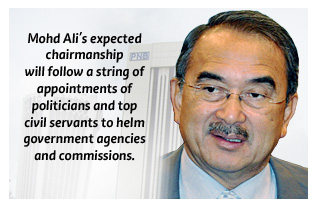
Mohd Ali Rustam: Another recycled politician who was disqualified in theAli Rustam 2009 Umno Baru elections, after being found guilty of money politics.
As the former Chief Minister of Malacca, he used the trappings of power to fund his son’s wedding, claiming that he wanted his adoring rakyat, around 130,000 of them, to share and partake in his personal happiness.
Following allegations of corruption, the Malaysian Anti-Corruption Commission launched an investigation and said: “We are going item by item, to see how much money was spent and who paid for it.” Presumably, they are still going through the list, because we have heard nothing.
Anyone who has ever wanted an adventurous ride in a cherry-picker (the machine which Tenaga wiremen use, to lift them to the tops of overhead poles), can have one at the end of the ride in Ali’s RM16 million monorail, which travels two feet before stopping dead in its tracks. The stranded passenger will be plucked from the monorail and deposited on land by a cherry-picker - Malacca’s own version of a thrilling theme park ride.
Mukhriz Mahathir: We will have to wait for his father Mahathir’s nextMukhriz Mahathir2 press release to learn about Mukhriz’s good works and future aspirations. Whenever Mukhriz starts talking, people glance at their watches and say they have to rush for an appointment.
Mukhriz may have been born with a silver spoon in his mouth, but he is tainted with the Mahathir brush.His dad is a bore with a capital B, when he reminds us that Umno-Baru must inject young blood and elect smart people into the party. It is possible that Mahathir was referring to Khairy Jamaluddin.
umno-tikam-belakang
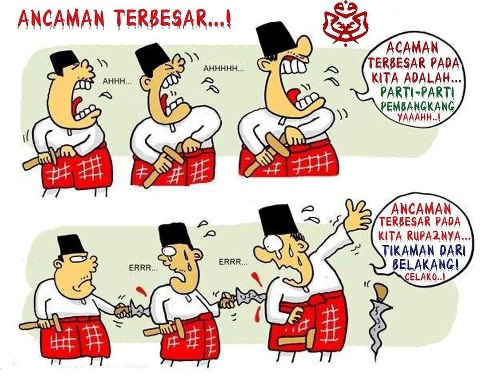
Najib’s predictions about the internal threat are coming true. His party has decided to deploy the police, to protect the ballot papers to be used in the party election.
This speaks volumes about the state of affairs within UMNO Baru. The cheating in the UMNO-Baru elections will make GE13 look like a model of a fair election!

Monday, September 30, 2013

PLUG-IN PROFIT SITE | Risk Free Application Form

Let me ask you a question... Are you trying to start an online business...? If so, let me know if this sounds like you: You want to make money online, but you keep getting caught up in all of the technical stuff that goes along with starting an online business... HTML, CSS, FTP, PHP and a dozen other things you have to have to know to get a website online and making you money... right? Or, do you FINALLY feel like you've got things figured out, and as you are about to move forward on your dreams... You get ANOTHER email... from ANOTHER guru... telling you about the NEW shiny object of the day... And your plans... that you felt SO confident about just minutes earlier... fall to the ground as you reluctantly turn your back on your "plan" and start moving towards the next new thing...

Friday, September 27, 2013

Tengku Razaleigh*: Understanding History of Malaysia is vital

PLS Banner 600x87 photo PLS-33431480-600x87_06.jpg
*Tengku Razaleigh Hamzah is the former finance minister of Malaysia. He delivered this speech at The Malaysian Branch of The Royal Asiatic Society Lecture in conjunction with the 50th anniversary of the formation of Malaysia on Wednesday, September 25, 2013, at the Royal Selangor Club Annexe in Bukit Kiara, Kuala Lumpur.
kuli
Tengku Razaleigh Hamzah
It is my singular honour to have been invited to such an august gathering as this. I am privileged to have this opportunity to talk about the birth of Malaysia. Allow me, therefore, to record my gratitude and appreciation to our host, the Malaysian Branch of the Royal Asiatic Society, for the invitation in the first instance.
The timing is apt, coming as it does eight days after the 50th anniversary of her founding. It is also relevant given that Malaysia is facing unprecedented political and economic challenges. These challenges are formidable and, if left unsolved, could cause damage to the economy and political integrity of Malaysia.
The legitimacy of the formation of Malaysia is based on the fact that at the time of her formation, Malaya was the only country that was independent and had a democratic constitution, with institutions supporting such a constitution, within this region.
Her economic foundation justifiably gave Malayans, at that time, a vision that we would one day be the shining example in South East Asia. It was with this perspective that Malaya, under the leadership of Tunku Abdul Rahman, took the initiative in helping to maintain stability in the region. This was at a time when British colonialism was forced by international opinion and in particular by Asia, to retreat as the colonial power without leaving a vacuum.
Malaysia was born, therefore, out of a historical necessity at that time. It bears reminding that this country still remains a stable political force in the region. The success or failure of Malaysia will not only affect Malaysia, but the entire Asean region. Therefore, a historical understanding of the birth of Malaysia is very important. Just as important is the legitimacy of Malaysia to the citizens of the country as well as to Sabah and Sarawak as part of Malaysia which is a political necessity to maintain the stability of the region.
Much has been written about the formation of Malaysia and, by and large, the writings have been consistent. But it is sad to note that there is a general ignorance of her founding among the younger Malaysians. The importance of remembering our past should never be made light; for it is the past that puts us where we are today. It is a pity that this ignorance exists; but in itself, it is harmless. However, the danger lies in the possibility of it being exploited for particular ends.
It is fair to say that an average middle-aged Sabah or Sarawak Malaysian does not seem to know about her formation, as is the average middle-aged peninsular Malaysian. But one thing is clear. There is resentment at and dissatisfaction with Sabah and Sarawak being treated as and equated to just another state of Malaysia. To be sure, there are other issues; but the two being equated to any of the 11 peninsular states is perhaps the most contentious. It had been simmering since the 1980s but it never surfaced, not as a formal articulation anyway. It is, nevertheless, a political wart that has the potential to come to a boil.
The advent of social media such as the Blog and Facebook has altered the scene. With such media reaching every nook and corner of the country, everyone is now acutely conscious of the angst of Sabah and Sarawak Malaysians over the issue. The anguish is magnified whenever 16th September comes around. We are then flooded with grouses of unfulfilled promises to Sabah and Sarawak relating to the formation of Malaysia. These grievances come from almost all sectors of our society, either in writings or speeches or other suchlike mode. People of religion would present their thoughts with a bias towards religious issues, and people of trade, from an economic perspective. Other issues that are often aired include education, human rights and politics.
It bears noting that this discontentment and whatever dissatisfaction expressed do not go beyond the superficial. The sad part is that not many would care to sieve through the events and development leading to the birth of Malaysia. It is my intent, this evening, to attempt this. But before that it might serve us well to note a few of these grouses.
Let me paraphrase the feeling of a particular Sabah academic. He pointed out that Sabahans and Sarawakians agreed to be part of Malaysia on the understanding that the interests of the states were safeguarded. These interests were enshrined in the 20/18-point Agreements, the London Agreements and the Inter-Governmental Reports. He pointed out further that the safeguards were not honoured and taken away at the whim and fancy of the Federal Government, and added in no uncertain terms that Sabah and Sarawak are equal partners to the Federation of Malaya in Malaysia and not two of her 13 states. A group of east Malaysian politicians and social activists went so far as to describe the transgressions as a looting of their riches.
A complaint from Sarawak took on a more symbolic strain. The formation of Malaysia was compared to a marriage with a prenuptial agreement, that is, the 18-point Agreement. The complainant described how the wife, Sarawak, was hurt by the lack of attention from the husband, Kuala Lumpur, but continued to be the dutiful and responsible wife.
In the recent past, a Sabah politician bluntly remarked that Sabah belongs to Sabahans and not to Malaysia as the Malaysia Agreement has yet to be implemented. He agitated for the review of its implementation while at the same time addressing the unhappiness of Sabahans and Sarawakians. He argued that Sabah has lost most of the 20 points after decisions affecting the state were made by Kuala Lumpur. Worse, he accused that Sabah was treated like a colony instead of an equal partner in Malaysia. A Sabah Bishop, speaking on Malaysia Day 2012, questioned whether the agreement to uphold freedom and other native rights and customs is being kept. He tellingly pointed out that it was the understanding and the compromise displayed during the negotiation that convinced the then North Borneo and Sarawak to jointly form Malaysia with the Federation of Malaya and Singapore.
An activist with the moniker anak jati Sabah (a genuine Sabahan), in venting his frustration, plainly and boldly pointed out that peninsular Malaysians have been wrong in referring to Sabah as having joined Malaysia. He argued that Malaysia had not always been in existence; that Sabah, together with Sarawak, Singapore and the Federation of Malaya had formed Malaysia. He contended that the 20-point Agreement and the Batu Sumpah — a monument of honour, as it were, that was erected in Keningau as a reminder of Sabah's support for Malaysia and the 20-point Agreement - were not honoured and had been discarded by Kuala Lumpur. His bitterness could be discerned from the following observation that has been attributed to him; that is, "the Batu Sumpah and the 20-point Agreement have been slowly and steadily violated and rubbished by Kuala Lumpur."
An equally strong sentiment had been echoed by a Sarawak professional who, in reflecting about Malaysia, had made it known that it is justifiable for Sarawak to opt out of Malaysia because of the perceived poor treatment of her by Kuala Lumpur through what he felt was the violation of the 18-point Agreement. However, he conceded that there are advantages of being in Malaysia.
These, then, are a sampling of the issues underpinning the listless and uneasy relationship between Sabah and Sarawak, and Kuala Lumpur. If we were to use the earlier Sarawak wife and Malayan husband analogy, it is not unbecoming to describe it as a relationship between strange bedfellows. These issues are critical when they viewed against the backdrop of the territorial realpolitik that is particular to Malaysia. They need to be redressed and the onus is greatest on those with the most political influence. Only in this way could the legacy of a vibrant and economically progressive Malaysia taking her rightful and dignified place on the world stage be meaningful to our children and grandchildren.
Ladies and gentlemen, I would suggest that we begin the process of reparation by looking at the gestation leading to the formation of Malaysia. I would suggest further that we approach this with an open mind, without any preconception. Let us analyse these grouses impartially. Let us not jump to any conclusion by saying that a point is no longer relevant or appropriate or significant. Let us view the issues in perspective and address them accordingly. And let us begin at the beginning.
In a speech on September 16, 1961, Tunku Abdul Rahman, the founding father of Malaysia, spoke of the decision to form the confederation. He pointed out that the formation was made with "much care and thought." There was "mutual consent" by "debate and discussion" and "inquiries and elections held over two and a half years".  Tunku was proud that Malaysia was created "through friendly arguments and friendly compromise". He believed that the cooperation and concord that prevailed were driven by the desire to share a common destiny. Tunku and the other leaders must be cherished for Malaysia's successful formation. We also owe it to them to make good on the compromises as we realise the common destiny that the Tunku spoke of.
Earlier in May 1961, at the Delphi Hotel in Singapore, Tunku had mooted the idea of bringing together Malaya, Singapore, North Borneo, Sarawak and Brunei. His proposal was seen as a move to counter the communist influence in the region, to balance the racial composition and to expedite the economic development and independence of Singapore, North Borneo, Sarawak and Brunei. The suggestion was well received as it had struck a chord with the British decolonisation attitude of the day. There was, however, concern over the possibility of opposition by the local leaders of the three Borneo territories. This was confirmed when the Sarawak United People's Party, Partai Rakyat Brunei and the United National Kadazan Organisation formed a United Front to denounce the proposal as "totally unacceptable". Subsequently, the Sarawak National Party supported this position.
Opposition to the idea of a Malaysia was also strong from the people of the North Borneo interior.
To overcome this opposition, Tunku visited Sarawak and North Borneo in July and August 1961 to win over the sceptics. Fact finding visits by the Borneo leaders to Malaya eventually convinced them that Malaysia was a good idea. In addition, Sarawak leaders were sent to the Commonwealth Parliamentary Association Conference taking place in Singapore during the period. This afforded them the opportunity to discuss the concept further with their Malayan and Singapore counterparts.
A consensus was eventually established and this led to the formation of the Malaysia Solidarity Consultative Committee (MSCC). It explained the concept further to the people of Sarawak, North Borneo and Brunei and discussed issues relating to the formation of Malaysia. The MSCC prepared a memorandum that underscored the need to gauge and ascertain the opinion of the general population of North Borneo and Sarawak on the Malaysia concept.
Signing-of-the-Cobbold-Report-of-the-Commission-of-Enquiry-North-Borneo-and-SarawakThe Cobbold Commission on the Formation of Malaysia
In early 1962, this was submitted to the Cobbold Commission that had been set up to determine whether the people of North Borneo supported the formation of Malaysia. Later that year, the Commission submitted its report to the Malayan and British governments. Among other things, the report recorded that 80% of the people of North Borneo and Sarawak supported the formation of Malaysia.
However, the Cobbold Commission reported that large sections of the population, especially in the interior, had no real appreciation of the Malaysia concept. But it recorded that about one third of the population favoured the idea strongly and wanted Malaysia to be formed as early as possible. This third was not too concerned about the terms and conditions. Another third asked for conditions and safeguards that varied in nature and extent, but was, in the main, favourable to the concept. The remaining third was divided into those who insisted upon independence before Malaysia and those who preferred to remain under the British.
The Commission also expressed the following caution which is taken verbatim from its report: "It is a necessary condition that from the outset Malaysia should be regarded by all concerned as an association of partners, combining in the common interests to create a new nation but retaining their own individualities. If any idea were to take root that Malaysia would involve a 'take-over' of the Borneo territories by the Federation of Malaya and the submersion of the individualities of North Borneo and Sarawak, Malaysia would not be generally acceptable and successful."
The safeguard demanded as a precondition to the formation of Malaysia was looked into by an Inter-Governmental Committee (IGC) set up upon the recommendation of the Cobbold Commission. At its first meeting in Jesselton on 30th August 1962, the IGC considered a memorandum calling for, among other things, the two territories having control over education and health for 10 years before reverting to the federal government. The memorandum was, with some modification, included into the Malaysia Act, the Federal Constitution and the relevant state constitutions. These safeguards have now come to be known as the 20-point Agreement for Sabah and the 18-point Agreement for Sarawak.
For the sake of clarity, I should spell out, in passing, the 20-point safeguards for Sabah. They are points relating to:
  1. Religion
  2. The national language and the use of English
  3. The constitution to be a completely new document
  4. Head of Federation
  5. Name of Federation
  6. Control over immigration by the state
  7. Right of secession
  8. Borneonisation
  9. Position of British officers
  10. Citizenship
  11. Tariffs and finance
  12. Special position of indigenous races
  13. State Government
  14. Transitional period
  15. Education
  16. Constitutional safeguards
  17. Representation in the Federal Parliament
  18. Name of Head of State
  19. Name of State and
  20. Land, forest and local government, etc.
The last two points regarding the name of the state and land, forest and local government, etc. are not in the safeguards for Sarawak.
These safeguards were to be reviewed 10 years after the coming into being of Malaysia, that is, after 16th September, 1973. Tun Razak, who was the then Prime Minister, set up a committee in that year under the chairmanship of his Deputy, Tun Dr Ismail, to review the IGC agreements. However, the committee did not meet at all in that year because the Draft Bill of the Petroleum Development Act (PDA) was being drawn up at the time. The prevailing wisdom then was that priority be given to the acceptance of the PDA by Sabah and Sarawak. Upon the coming into force of the PDA, I was asked by Tun Razak to get the Chief Ministers and Menteris Besar of the relevant states to enter into agreements in accordance with the requirements of the PDA. As it turned out, Sabah and Sarawak put up formidable stands in making known their positions.
In any event, Tun Dr Ismail passed away in August 1973 and this was followed by the demise of Tun Razak in January 1976, giving the review a tragic twist with it being left on the backburner. I should like to emphasise here that the review not taking place despite Tun Razak's intention reflects the good faith of the federal government in the relationship with Sabah and Sarawak. However, this was overtaken by the development of events during that period that I have just described. Perhaps the review could be considered afresh as Malaysia celebrates her golden anniversary.
Sukarno
President Sukarno
The story of Malaysia will be incomplete if I do not touch on the significant reactions by Indonesia and the Philippines to the idea of a Malaysia. Indonesia withdrew its initial support for the concept. The Philippines similarly objected to Malaysia's formation and announced its own claim on North Borneo.
This led to another round of public opinion assessment, this time by the United Nations. Its report was made public on September 13, 1963. The UN confirmed that the people of North Borneo and Sarawak had freely expressed their wish for the formation of Malaysia. They were fully aware that this would bring about a change in their status. The report also noted that this was "expressed through informed democratic processes, impartially conducted and based on universal adult suffrage". The Malaysia Agreement had been signed earlier on July 9, 1963 at the Marlborough House in London, with her birth marked for August 31, 1963. In the event, Malaysia was proclaimed on September 16, 1963 to accommodate the UN report which was completed two days earlier.
I have tried to paint a comprehensive picture of how Malaysia came into being. Sadly, it does not quite match what was agreed upon originally. One could come up with any number of explanations for this, but I would respectfully submit that we do not go down this route. Let us muster enough courage to recognise and admit that we have a problem. To do so is to begin the process of its resolution.
That there was poor availability of information surrounding the formation of Malaysia in the public domain is most unfortunate. This has, in part, led to the breeding of animosity between Malaysians on both sides of the South China Sea. To be sure, this unfriendliness was not by design. Neither was it borne out of malice or prejudice. Certainly there was no ill intent. The oft repeated error that Sabah and Sarawak are but two Malaysian states is a case in point. It is an error that has Sabahans and Sarawakians blowing hot and cold under their proverbial collar. We must now right this misconception. For a start, there is a dire need for factual accuracy in the information on how Malaysia came to be. And it would help greatly if we could ensure that this critical part of our history is clearly spelt out in our school curriculum.
It should be pointed out, for instance, that 31st August is of no particular significance to Sabah and Sarawak, its grand celebration notwithstanding. It is but the date of Malaya's independence and it should be celebrated for just that. On the other hand, September 16 — the Malaysia Day — has a greater significance and is certainly a more important date in the annals of Malaysia. It must, therefore, be allowed to take its place as a major celebration in our national calendar of events.
I should also point out that the 20-point and 18-point Agreements have been incorporated into the Federal Constitution. Whether this is taken to mean that the two agreements no longer exist as once propounded by certain quarters is a conjecture that borders on the sensitive, given the emotive nature of the subject. In any case, the Batu Sumpah of Keningau will stand in perpetuity as a monument to the spirit of the 20-point Agreement.
This begs the question, what next? Where do we go from here? They are best answered by those in the political driving seat. It is, therefore, incumbent upon those in power to kick start the process. We have to, no, we must prove the cynics are off the mark when they say that the act of Sabah and Sarawak jointly forming Malaysia is but a transfer of political power from Britain to Malaya. We must prove the caution by the Cobbold Commission wrong. We must do this and reinforce and strengthen the building blocks of a united, prosperous and harmonious Malaysia.
A Malaysia such as this could provide the cornerstone for the growth and stability of our beloved land. By extension, such a growth and stability could offer a rippling effect to benefit this region which faces many uncertainties. A united, prosperous and harmonious Malaysia will, most certainly, garner international respect and admiration. Given the political uncertainty close to the Sabah shore, a calm and collected Malaysia, confident of her position in the international scheme of things, could well play a critical role in helping to resolve the complex and multifarious problems besieging the region. As an example, Malaysia could provide the calming voice in the effort to overcome the overlapping claims by various countries in the Spratlays as a result of the UN Law of the Sea Treaty recognising a 12-mile territorial sea limit and a 200-mile exclusive economic zone limit.
Ladies and gentlemen, it bears repeating the reminder that tensions and stress points among a people tend to increase in times of economic difficulty. Given that there are still large areas in Sabah and Sarawak, particularly in the interior, classified as poor with the standard of living nowhere near that of urban enclaves, it is not surprising if the animosity towards this side of Malaysia is felt strongly. It does not help that the greater Kelang Valley is seen as, rightly or wrongly, enjoying the level of wealth far ahead of the two eastern territories. Such situations as the recent increase of the pump price of petroleum worsen the situation as providers of goods and services pass such increases to the consumers. This would heighten further the financial difficulty suffered by the poor of Sabah and Sarawak. Therefore, the government should seriously think of ways to overcome such hardships as this.
It is time that the government absorbed the continually increasing financial burden rather than allowing it to ultimately land on the shoulder of the people. If this is well handled, I am confident that we can begin to mitigate and work towards overcoming the negative perception towards Kuala Lumpur that seems to be playing in the collective minds of Sabahans and Sarawakians.
Ladies and gentlemen, thank you and good afternoon.
THINKING BIG! ---> http://www.sociallever.com/?id=JEJelani

Only September 16 has historical significance,says Tengku Razaleigh

PLS Banner 600x87 photo PLS-33431480-600x87_06.jpg
by Terence Netto @http://www.malaysiakini.com
COMMENT: The Malaysian Branch of the Royal Asiatic Society (MBRAS) did well to bring two people who had some engagement with the creation of Malaysia in 1963 to shed perspectives on that event.
Tengku Razaleigh Hamzah was a young economist and member of UMNO when Malaysia was formed. He was invited by MBRAS to deliver a lecture in Kuala Lumpur yesterday on the formation of Malaysia 50 years ago.
The MP for Gua Musang used the occasion to remind his listeners what UMNO has chosen to miss out on when the party neglected last week to place him among the contestants for its presidency.
tun dr ismail abdul rahmanHe plunged into the miasma of contention that has in the last decade engulfed the issue of Sarawak’s and, especially, Sabah’s joining Malaysia and emerged with a constructive handle by which to steer matters to a resolution.
This was his proposal to restart a review process that was scheduled to be held in 1973, 10 years after Malaysia’s formation, but did not take place because the person who was to chair the task, Deputy Prime Minister Dr Ismail Abdul Rahman (right), died in August that year.
Twenty-nine months later, Abdul Razak Hussein, the prime minister who had approved the review, also died. And with that the matter was consigned to a backburner.
(Tun) Hanif Omar, the former Inspector-General of Police, was a young officer who was tasked with assignments connected to Malaysia’s formation immediately prior and long after the seminal event took place.
Chairing yesterday’s lecture by dint of his chairpersonship of MBRAS, Hanif had shards of absorbing information to contribute but these did not cohere the way Razaleigh’s discourse did because, while Hanif’s bits and pieces did inform, they did not enlighten.
hanif-omar2-may11_180_283_100No doubt, Hanif’s (left) recall of interesting, even intriguing, minutiae would make for a plum pudding of a memoir on a career that spanned the early decades of Malaysia’s emergence to full-fledged nationhood.
But minus a frame, Hanif’s tidbits generated sparks but there was little illumination to be had. Tidbits can titillate but it is insight that enlightens and charts the way forward.
For that reason, Razaleigh’s paddling was more constructive for he chose to steer by a compass he took from Malaysia’s principal proponent, Tunku Abdul Rahman, the Federation of Malaya’s first Prime Minister in 1957 and of the confab that emerged in 1963, with Singapore’s merger with the federation, joined together with Sarawak and Sabah, with Brunei choosing to stay out for nebulous reasons, on which Hanif had some quirky takes.
Broad and generous vision
The Tunku’s vision was broad and generous. He sought to allow Lee Kuan Yew to outflank formidable left wing forces through Singapore’s merger with Malaya and to counterbalance the thereby numerical superiority of the Chinese with the natives of Sarawak and Sabah who had vast tracts of territory but little know-how to develop it, besides having to face an incipient communist insurgency and Sukarno’s adventurism.
In Razaleigh’s recap of the consultations and negotiations that preceded the formation of Malaysia, the breadth and generosity of Tunku’s vision had the redemptive power to overcome the penumbras, crochets and quavers in the Malaysia agreements.
But recalcitrant realities are always baulking ideals, realities like the mortality of pivotal leaders - Ismail’s unexpected death in 1973 - before he could get down to the task of a review of the founding documents that presaged Malaysia’s formation, a review that could have taken cognisance of incubating discontents in Sabah and Sarawak.
Not for nothing did the Tunku, in the last years of his life (he died in December 1990) while staying in Penang, refer to Ismail as ‘that noble one” to visitors who tapped his recollections of past history the elder statesman had witnessed.
RazaleighRazaleigh did not just steer by the vision the Tunku enunciated in 1961 when he first mooted the idea of Malaysia.
He had opinions of his own, the most telling of which was that Putrajaya should not pass off August 31 as Merdeka (Independence) day for Malaysians, Sabahans and Sarawakians included. The day is only significant for those on the Peninsula, not for the whole of Malaysia.
Razaleigh said only September 16 has historical significance for Malaysians because it was the day on which Malaysia was founded, an opinion that elicited Hanif’s faint demurral.
Clearly, for Razaleigh, the way out of the churning discontent in Sabah and Sarawak that he said posed “unprecedented political and economic challenges” to Malaysia required candid acceptance of the facts of our history that must be taught to the young if they are not to inherit the whirlwind.

A NEW TWIST ON 100 % COMMISSIONS

"A New Twist On 100% Commissions Called 'Accelerated Leverage' Is Launching Soon... Your Income Will Grow Like A Blazing Wildfire!" GRAB IT! HERE
 photo PLS-33431480-450_03.jpg

100% COMMISSIONS ACCELERATED LEVERAGE

Shocking Twist in 100% Commissions http://www.PlsFunnel.com/33431480
 photo PLS-33431480-Register_02.jpg


Wednesday, September 25, 2013

On Chin Peng: Who is Lying?


THINK BIG - Try this --->http://www.sociallever.com/?id=JEJelani

by Aidila Razak and Tan Juin Wuu@http://www.malaysiakini.com
NajibContrary to Prime Minister Najib Abdul Razak's claim, Chin Peng's former comrades and family members have insisted that the late Communist Party of Malaya (CPM) leader had applied to return home following the 1989 Hatyai Peace Accord.
"The lawyers requested three documents from the Home Ministry when Chin Peng first filed the case (to return home) in the Penang High Court. The first was a list provided by CPM of those who have applied to go back (to Malaysia), the second a list of those rejected by the government and third, a list of those approved.
"Chin Peng's name was in the first document, proving he had applied," his ex-comrade Nan Jin told the media at the sidelines of the second day of Chin Peng's wake in Bangkok today.
Chin Peng's nephew, Lee Chung, added that a news article in 1991 also quoted then Inspector- General of Police Haniff Omar that his uncle had applied towards the end of the one-year stipulated application period.
He also pointed out that then Police Special Branch chief Zulkifli Abdul Rahman was quoted in the same year as claiming that Chin Peng's application was being processed.
"So what (Prime Minister) Najib Abdul Razak said is not the truth because logically, the 1991 statements show that an application was made," he said.
Najib said the remains of Chin Peng – or his real name Ong Boon Hua – would not be allowed on Malaysian soil as he did not apply within the one-year period after the Peace Accord and that the family can sue the government if it disagrees.
Chin Peng lost his case in 2008 when he could not produce identification documents to prove his citizenship to the Court of Appeal.
'We'll bring him home with dignity'

Meanwhile, Lee Chung's brother Lee Suvit said the family would "do their Chin Peng at 1955 Baling Talksbest" to fulfill his wish to have his remains returned to his hometown of Sitiawan, Perak.
"We will try to bring him back with dignity," said Suvit, whose sister cared for Chin Peng until he died of cancer on Sept 16.
The Thai national said that despite dying in exile, Chin Peng died "calm and happy", having spent his twilight years with family, writing and taking walks, "just like any other old man".
While the rest of the world may focus on Chin Peng's political role, for the family, it would be his jokes and kindness which would be missed the most.
Painting a picture of a much-loved patriarch, he said that Chin Peng would play his harmonica at family gatherings and his favourite tune was the song “Red Flag”.
chinpeng01Suvit said that even Chin Peng's absence in his children's life was an act of sacrifice to "protect them". Both children are Malaysians and shy away from the public eye to avoid possible reprisals.
Suvit said that his daughter, now only a year younger than Chin Peng when he became CPM secretary-general at 23, grew very close to him.
Yet, he said, Chin Peng's grandnieces and grandnephews, who were seen at the wake, do not know much about their granduncle's political significance.
Born and bred in modern Thailand, their lives are a far cry compared to Chin Peng's who joined the resistance at 15.
"Mine, too, is very different. He used to say 'times were tough in my days' and we'd brush him off.
"Maybe (his grandnephews and grandnieces) know some stories about him from us, but I think they just know that their granduncle is a good man, and whatever his struggle was, it was for a good cause," he said.
Suvit, who now owns a factory in Shanghai, said his own grandchildren would know even less about Chin Peng.  "There is no need to pass down stories about his struggle to the coming generations. They can read about his role in Malaysia's Independence and Southeast Asia in books. He is part of history," he said.
 photo PLS-33431480.jpg