The Truth Revealed

Saturday, December 20, 2008

Hillary under the Clinton cloud


Big News Network.com
Friday 19th December, 2008

Former President Bill Clinton has raised millions of dollars from governments and politicians in the Middle East and Asia, raising fresh concerns about the impartiality of his wife Hillary's role as Secretary of State.

Bill Clinton received donations ranging between one and five million dollars from a political party in India, a wind turbine company owned by Tulsi R. Tanti (right), one of the wealthiest Indian businessmen, and the Confederation of Indian Industry which also donated between 500,000 and one million dollars.

Clinton raised at least 46 million dollars from Saudi Arabia and other foreign governments for the William J. Clinton Foundation, which was created to fund his presidential library and fight poverty and disease worldwide.

The Saudi kingdom gave between ten and twenty five million dollars.

Other governments on the donations list include Kuwait, Qatar, Brunei, Oman, Italy and Jamaica.

All donors gave at least 492 million dollars from the inception of the foundation in 1997 to the end of last year.

After years of refusing to divulge his donors, Clinton was forced to release the list to allay concerns about conflict of interests between his international philanthropic fundraising efforts and the worldwide diplomatic role of his wife.

But the large sums given by foreign governments will inevitably play a role at her Senate confirmation hearings next year.

Friday, December 19, 2008

Major donors to Clinton Foundation

Amar Singh, Lakshmi Mittal, CII, Reliance among major donors to Clinton Foundation
IANS Thursday 18th December, 2008

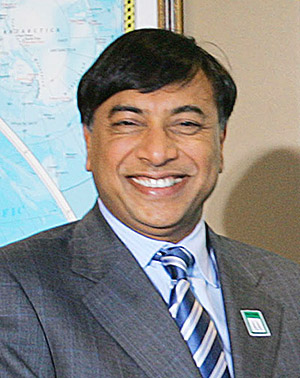
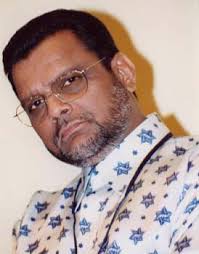
Several Indian big-wigs, including industrialist Lakshmi Mittal (left) politician Amar Singh (right), corporate houses Reliance and Ranbaxy, media house India Today group and Confederation of Indian Industry figure in the list of prominent donors to the Clinton Foundation, according to the information made public Thursday.

Though the exact amounts donated were not released, steel-tycoon Lakshmi Mittal and Samajwadi Party leader Amar Singh fall in the category wherein they donated between one million to five million US dollars. So did Tulsi R. Tanti (right) headed Suzlon Energy Limited, which is based in Amsterdam, and is a leading supplier of wind turbines.

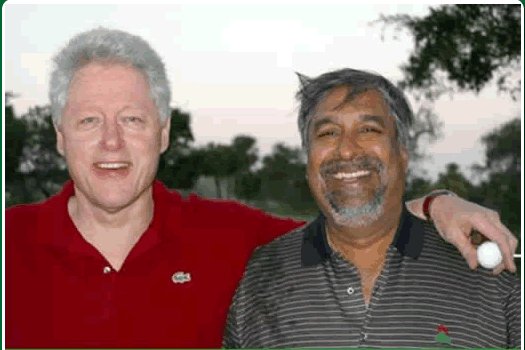
A close friend of the Clinton family, successful Indian American entrepreneur Vinod Gupta(right), donated between quarter million to half a million US dollars, so did hotelier Lalit Suri (left) who died in October 2006. Ajit Gulabchand, (left-below) chairman and managing director of Hindustan Construction Company (HCC) also made a similar donation.

The list of donors was released by the William J. Clinton Foundation, established by the former US President, Bill Clinton, as part of an agreement with the president-elect, Barack Obama, under which he nominated the former First Lady, Hillary Clinton, as his Secretary of State.

'As soon as Senator Clinton was nominated to be Secretary of State, the Foundation staff began working with President-elect Obama's transition team to ensure that not even the appearance of a conflict of interest existed between the Clinton Foundation's operations and Senator Clinton's anticipated service as Secretary of State,' the Foundation said in a statement issued in New York.

The Foundation is involved in charitable work particularly in the underdeveloped world and in Africa. A large number of its donors are from outside the US. The biggest donors include the Children's Investment Fund Foundation, UNITAID, Bill and Melinda Gates Foundation, kingdom of Saudi Arabia and government of Norway.

President Clinton's efforts are unprecedented and go above and beyond what the law requires and are intended to allow the important work of the Foundation to continue.

The Confederation of Indian Industry (CII) donated between half a million to one million US dollars, according to the list released by the Clinton Foundation. Major Indian and Indian American donors in the category of $100,000 to quarter million include the India Today group, Lata Krishnan, Mike Patel, Raani Corporation, Ranbaxy Pharmacuticals and Reliance Europe Limited.

Chrysler decides to close auto factories


Big News Network.com
Thursday 18th December, 2008

Thirty car manufacturing plants in the US will be closed for a month or more by Chrysler.

The shutdowns will occur from this Friday, with employees being asked to take leave for the duration.

Chrysler has said the credit crisis and dwindling sales have caused the decision to close the plants.

The company estimates that between 20 to 25 percent of its volume has been lost since November.

Chrysler had warned the US government it could collapse without a special funding arrangement.

US President George Bush has said his administration is trying to put together a plan to aid Chrysler, GM and Ford.

On Wednesday, the president told the Fox news network his administration would make a decision "relatively soon" and that he would look at all options.

Wednesday, December 17, 2008

The swimming naked awards


Dec 16th 2008
From Economist.com

A year of embarrassment when the financial tide went out

“YOU only find out who is swimming naked when the tide goes out”, Warren Buffett famously observed. In 2008, the financial tide went out further than anyone expected, revealing a multitude of skinny-dippers. To help them cover up their embarrassment, Business.view is proud to announce the following winners of the 2008 “naked shorts” awards:

Scoundrel of the year: Too many contenders to mention, but the last minute entrant has won by a landslide: Bernie Madoff, who is providing a helpful demonstration of the difference between a financial collapse due to management incompetence (most of this year’s banking failures) and a genuine 100% fraud.

AP Bernie Madoff, scoundrel of the year (photo left)

Outstanding Public Relations: No question, the decision of the bosses of Detroit’s shrinking Big Three car makers to fly in separate corporate jets to appeal to Congress for a bail-out. What better way to tell the public that the leaders of corporate America are out of touch? Runner up: John Thain, boss of Merrill Lynch, who looked like a hero for saving his firm, only to blow it by demanding his bonus.

Greatest sovereign risk: In a year of meltdown, Iceland is a fitting winner.

Rumble in the jungle: Dick “the Gorilla” Fuld versus Lehman “Nameless” Employee. The boss who presided over Lehman’s demise was allegedly knocked out with a single punch in the investment bank’s gym, by an angry employee.

Gift horse: Mr Fuld wins again, for reportedly turning down multiple offers of life-saving investment in Lehman. Honourable mentions to the bosses of Deutsche Bank, Barclays and Ford, who all publicly said they did not need an injection of state funds, but may live to regret it.

The Andrew Mellon award for incompetence as Treasury Secretary: Hank Paulson, whose lack of strategy and catastrophic decision to let Lehman Brothers fail made a bad situation far worse.

Best letter: Runner up, for its undisguised Schadenfreude, was Congressman Henry Waxman’s letter to the heads of Wall Street firms after the government bought some of their shares, demanding to know the salaries of their top earners, their bonuses and how these were calculated. But the lifetime achievement award goes to the letter A, as in “triple-A rating”, which is now entering long-overdue retirement.

Most convincing Jekyll-and-Hyde impersonation: Scary sovereign-wealth funds were going to buy up the world. Then they were heroically going to rescue the banking system. Now they are in hiding, counting their massive losses and wondering where all their money went. In second place, and closely related, oil: expensive one moment, cheap the next.

Most dismal scientist: Nouriel Roubini and George Soros battled it out for the role of scarily-accented Dr Doom in the next James Bond movie, “A Quantum of Funds”, but nobody put the dismal science into economics more effectively than the Republican vice-presidential candidate, Sarah Palin, during her unforgettable interview with Katie Couric. As she explained: “That’s why I say I, like every American I’m speaking with, we’re ill about this position that we have been put in. Where it is the taxpayers looking to bail out. But ultimately, what the bailout does is help those who are concerned about the health care reform that is needed to help shore up our economy. Um, helping, oh, it’s got to be about job creation, too. Shoring up our economy, and putting it back on the right track. So health care reform and reducing taxes and reining in spending has got to accompany tax reductions, and tax relief for Americans, and trade — we have got to see trade as opportunity, not as, uh, competitive, um, scary thing, but one in five jobs created in the trade sector today. We’ve got to look at that as more opportunity. All of those things under the umbrella of job creation.” Indeed. Perhaps best enjoyed in the Tina Fey version from Saturday Night Live.

Client of the Year: Client Number Nine, aka Eliot Spitzer. Wall Street had little to cheer about in 2008, but the fall of its former persecutor in a sex scandal was one of them. Happily for former New York Governor Spitzer, America’s tradition of giving failures a second chance is alive and well. Starting soon, he will write a regular column in Slate, an online magazine.

Best supporting abbreviation: Last year, it was SIV (structured-investment vehicle). This year, the winner is TARP, which stands for troubled asset relief programme—better known as a blank cheque for Mr Paulson. Runner up: IOU.

Most oligarchic oligarch: Two strong entries: Mikhail Frydman, Len Blavatnik and Viktor Vekselberg (collectively), for driving out Robert Dudley, the boss of the joint-venture between TNK and BP; and the winner, Oleg Deripaska, for embarrassing first Britain’s government and main opposition by inviting two leading members onto his yacht, and then himself by falling foul of the credit crunch.

Party of the year: The $86,000 partridge-hunting trip funded by AIG, a government-rescued insurance firm, for some top clients. They had fun, but the public outcry was such that lots of other firms cancelled their holiday parties lest they be accused of wasting money in tough times. Cheers!

Badly-timed nickname: Awarded jointly to Whole Foods Market and Starbucks. Being known, respectively, as Whole Paycheck and Fourbucks is fine when the going is good, but not when consumers are obsessed with value for money. Both of these pricey retailers have had a miserable year. Whole Foods’ shares are down by 75% so far in 2008, and shares in Starbucks are down by over half.

In memoriam: A posthumous award for this year’s notable departures. Contenders include Alan Greenspan’s reputation as a great central banker; investment banks; the newspaper industry; sport-utility vehicles; fiscal prudence; the inexorable rise of BRIC economies and the theory that BRICs had “decoupled” from rich world economies; pay increases; and capitalism. But the winner is economic growth—gone, though one hopes not forever.
Click here to find out more!

Flash Gordon award for saving the universe: Gordon Brown, Britain’s prime minister, would have won, but the self-proclaimed mastermind of the great global banking bail-out claims only to have been saving the world. The winner is Warren Buffett, whose timely investments seem to have rescued both General Electric and Goldman Sachs, home of the financial Masters of the Universe.

Comeback kid: Not everyone had a bad year. Some of the business winners in 2008 include the value-shopper’s favourite, Wal-Mart, whose chief executive Lee Scott is leaving on a high; Ken Lewis, boss of Bank of America, which now has enough of the country’s money to deserve its name; Paul Volcker, who has replaced Alan Greenspan as everyone’s favourite ex-central banker; bankruptcy lawyers and corporate restructuring experts; sucking up to your boss to keep your job; and nationalisation. But the winner is cash, which once again is king. Hot favourite for next year’s comeback kid award? The Great Depression.

Monetary fund director asks for quick minds to solve crisis

Big News Network.com
Tuesday 16th December, 2008

International Monetary Fund Managing Director Dominique Strauss-Kahn has asked world governments to come up with fresh ideas to solve the financial crisis.

Speaking in Madrid, Strauss-Kahn said efforts to rein in a spreading financial crisis needed coordinated action between governments to keep financial firms from going under.

He added that the world was facing an unprecedented decline in output, with negative growth effects to last for some time.

Strauss-Kahn said he expected the world's major economies to contract by 0.25 percent on an annual basis in 2009, requiring measures to stimulate consumer demand and liquidity support for emerging markets.

In conclusion, he said 'We are facing the first decline since World War II.'

OPEC members discuss oil demand

Big News Network.com
Tuesday 16th December, 2008

One day before members of the Organisation of Petroleum Exporting Countries meet to discuss reducing production, the cartel said Tuesday that global oil demand would decrease in 2009, contributing to an overhang of stocks.

As industrialised countries slipped into a recession, global oil consumption would fall to 85.68 million barrels per day next year, a year-on-year decrease of 0.18 percent, Vienna-based OPEC said in its monthly oil market report.

The figures stood in contrast to a forecast by the International Energy Agency in Paris, which said last week that demand would grow slightly, by 0.5 percent.

OPEC president Chakib Khelil has indicated that the cartel's oil ministers would decide on a substantial cut of production quotas when they meet in Oran, Algeria Wednesday, in order to support falling prices and deal with lower demand.

As OPEC predicts falling demand and rising production from non-OPEC suppliers, it said stocks would grow in the first three quarters of 2009, creating a market imbalance that would be addressed in Oran.

In November, OPEC had still forecast global oil demand to grow by 0.57 percent next year.

Saturday, December 6, 2008

Stop bickering and get down to business

Anwar must face up to reality: relatively minor conflicts within the opposition alliance, whether over the sale of alcohol in Selangor or Bumiputera quotas in the Kedah property market, can shape public perceptions of his coalition and of him. If he wishes to be prime minister one day, he will have to learn to focus on the things that matter to ordinary Malaysians. Delivery is paramount. As the Nike ad put it: “Just do it.”


Karim Raslan

Many Malaysians are getting tired and even resentful of the country's endless politicking. They are not used to such a drawn-out period of political uncertainty. They are familiar with bouts of intense political horse-trading — in the run-up to Umno elections, say — but these generally have been followed by the real business of governance.

Malaysians feel they took a decision back in March — for better or for worse — and now they want the political class to focus on the challenges of administration. No one appreciates watching as one side scores points off another.

Indeed, the anxiety over the economy has meant that public debate over matters of race and religion can and will assume a more “heated” quality.

Certainly, the mainstream Malay-language media and Umno have managed to make many in the community increasingly uneasy about their future.

At the same time, the middle classes, especially the Malay middle classes, are beginning to realise after the fatwa issued against yoga that there are no political parties out there to represent their interests. Moderate Malays have been short-changed by recent political developments. Their constitutional rights have been forgotten in the name of religious purity.

Still, the greatest scorn seems to be reserved for the politicians who can't resist in-fighting. The squabbling between Pas and the DAP — both components of the opposition alliance Pakatan Rakyat — infuriates everyone. Malaysians understand the deeply rooted structural differences between the two but right now they don't really care.

Thankfully, PR leader Datuk Seri Anwar Ibrahim has at last begun to realise that his most important KPI (Key Performance Indicator) isn't taking power at the federal level but dealing with disputes within his fractious coalition. Malaysians want him to achieve better administration in the five states held by the opposition. They are not interested in his sense of “manifest destiny”. The want results.

Anwar must face up to reality: relatively minor conflicts within the opposition alliance, whether over the sale of alcohol in Selangor or Bumiputera quotas in the Kedah property market, can shape public perceptions of his coalition and of him. If he wishes to be prime minister one day, he will have to learn to focus on the things that matter to ordinary Malaysians. Delivery is paramount. As the Nike ad put it: “Just do it.”

The public exasperation with Pakatan Rakyat should be benefiting the ruling Barisan Nasional. However, long drawn-out power struggles within virtually all of BN's component parties — most notably Umno — have meant that it is unable to benefit from PR's troubles.

Even Barisan leaders I have come across seem to be aware of their party's impending demise. Indeed, it's almost as if they're passengers on a runaway train that they're unable to stop. Money politics is the “kryptonite” factor that makes the whole situation so uncontrollable.

But once again, Malaysians are sick and tired of hearing of “money politics”. They want action, not hand-wringing. If “money politics” is a scourge, then root it out — that's their attitude. Charge the key perpetrators and shock the rest of the jokers into submission. There's a Chinese saying: “You must slaughter the chickens to frighten the monkeys.” At this juncture, most Malaysians would agree with that principle.

Curiously, United States President-elect Barack Obama hasn't been making things any easier for Malaysia's premier-in-waiting Datuk Seri Najib Razak. Obama remains a transformational figure even while doing something as prosaic as planning the composition of his administration. His focus on talent has been breathtaking. He has been willing to take on board former rivals, such as Hillary Clinton, as well as Republicans such as Defence Secretary Robert Gates. His emphasis on ability makes Umno's petty politicking look pathetic.

In times of uncertainty, the people want a leader who can unite and inject hope and direction into the national debate. Ladies and gentlemen of the Malaysian political establishment: Malaysians want action, not politicking. And they want leaders who can tell the difference between the two. - The Straits Times, Singapore

Monday, December 1, 2008

Begging to differ - BN heading for a split

KUALA LUMPUR, Dec 1 - Sometime in June, when cries for him to resign had dropped by a decibel or two and when he harboured hopes of staying on till 2010, Prime Minister Datuk Seri Abdullah Badawi started making plans for a national convention of the Barisan Nasional.

He commissioned a comprehensive survey of more than 3,500 Malaysians to understand what they truly felt about the ruling coalition. The findings confirmed his worst fears: a growing number of Malaysians did not believe that only the BN had the tools or ideas to govern the country.

Abdullah wanted to use the survey as a base for a thorough discussion of the coalition and its future road map. He got sidetracked by unfolding events and the BN convention got pushed back and back.

In October, Abdullah announced that he would not contest the party elections but would stay on until March 2009 to finish a slew of initiatives. Bundled in that package was the BN convention.

Checks by The Malaysian Insider showed that no date has been fixed for the meeting of the 13 component parties of the coalition but government officials say it will probably be in mid-February.

A government official said: “PM still believes that it is crucial for BN leaders to meet and thrash out all their concerns and differences and reach a new level of understanding. Otherwise, it will be tough for Barisan to move forward or look beyond what happened during the elections.’’

That fact has been underscored repeatedly since March 8. Defeat and rejection by a swathe of voters has forced MCA, MIC, Gerakan and PPP to rethink their own political strategies including their relationship with the senior partner of BN, Umno.

In recent days, statements by Datuk Chua Soi Lek (left), Datuk M. Kayveas (center) and Tan Sri Koh Tsu Koon (right) have reminded Malaysians that more than eight months may have passed since BN were shocked at the polls, but the clamour for change remains strong among BN component parties.

Chua urged for an end of the 'Ketuanan Melayu' concept, which he said created the impression of a master and servant relationship between Umno and BN parties. He was slammed for going down that path by a clutch of Umno leaders including Umno Youth chief Datuk Seri Hishammuddin Hussein.

But several days later, Gerakan chief Tan Sri Koh Tsu Koon supported Chua, urging Umno to use the term “special position” of the Malays instead of 'Ketuanan Melayu'.

“The term 'Ketuanan Melayu' would give rise to a tuan and hamba (master and slave) situation so let us use the proper term as provided for in the Federal Constitution. Article 153 safeguards the special position of the Malays and natives, the Rulers and Islam as well as protects the legitimate interests of non-Malays.

“We must understand the Federal Constitution, parliamentary democracy system and constitutional monarchy in totality, ‘’ he said.

Sandwiched in between those two comments was a stark warning from the People’s Progressive Party. Kayveas said that his party will pull out of BN if there are no substantial changes to the Internal Security Act. He also gave a broad hint that he expects the BN to change the way it has been operating if it was serious about rebranding itself.

“The Barisan has to make changes before the next general election. It is suicidal if we do not plan for the next elections. The problem with the Barisan was its success in the past 50 years. Success is a lousy teacher. It seduces smart people into thinking they can’t lose," he said.

“The March elections have already shown what the voters are looking for in good governance and multi-racialism. The Barisan has conducted numerous postmortems at all levels to gather input on what went wrong and why the voters rejected Barisan.

“The solution has always been multi-racialism, but to date Barisan is still caught in its own political racial configuration – that what is being spoken is not being implemented fast enough, ‘’ he said.

It is not difficult to understand why Messrs Chua, Koh and Kayveas are still pushing for a change. Their constituents - Chinese and Indians - deserted the BN in droves on March 8.

The BN survey suggests that, unless there are substantial changes to the manner Umno is preceived by non-Malays and there is evidence that the ruling coalition is capable of meeting the expectations of younger voters, the bank of non-Malay votes could remain with Pakatan Rakyat for the foreseeable future. This scenario could spell the end for MIC, Gerakan, MCA and PPP.

But sceptics do not believe that holding a convention for BN parties will make much difference. They note that for any real change to happen, it must be driven by Umno.

Anecdotal evidence suggests that Umno politicians are less willing to listen to their colleagues in BN today than they were in April or May. The sentiment in the ruling party is this: the time for talking and taking shots at Umno and shortcomings of the BN are over.

Commenting on Chua’s call to drop the 'Ketuanan Melayu' concept, Hishammuddin said: “It is better for leaders of BN component parties to join the Opposition if they want to continue questioning historical facts.’’

He is not alone. Other Umno leaders also believe that their friends in BN have become too vocal and need to pipe down and accept the reality of politics in Malaysia. If this “I know best’ approach permeates through discussions at the BN convention in February, it could persuade a few BN leaders that their future may lie outside the coalition.

Worse yet, it could be the clearest sign yet for many Malaysians that the BN - the political behemoth - is on its last legs.

Tuesday, November 25, 2008

Yes, vote-buying existed in my time, says Dr M

The Malaysian Insider
By Leslie Lau
Consultant Editor

KUALA LUMPUR, Nov 25 — Tun Dr Mahathir Mohamad continued his campaign today against money politics in Umno by questioning the determination of current party leaders in ridding themselves of the culture of vote-buying.

He admitted that vote-buying also existed in his time as party president, but it was never as openly practised as it is now.

"Incidents of bribery are now widespread and open until the public looks upon Umno politics with disgust. That did not happen before.

"It never came to a point where the party president is accused of money politics. It never happened to such an extent that the disciplinary board receives up to 900 complaints," he wrote in his chedet.com blog today.

Dr Mahathir has grown increasingly vocal over the issue of money politics, or vote-buying, in the current Umno election campaign.

He has openly accused party leaders of using money to secure nominations for top posts, and has threatened to name those he claims are guilty of bribing their way to high office.

The former prime minister has also warned Umno that it stands to lose heavily in the next general election if the practice of vote-buying continues.

He said today that the fact that money politics existed during his time cannot be used to excuse or legitimise the openly corrupt practises under the current party leadership.

"I admit that when I was Umno president and prime minister, there was already money politics," he said in acknowledging accusations that it was under his watch that vote-buying crept in to become part of the party's culture.


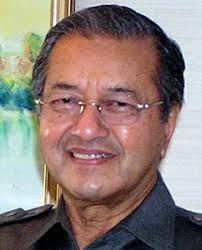
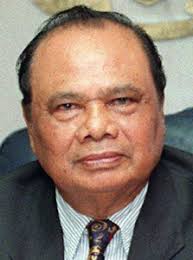
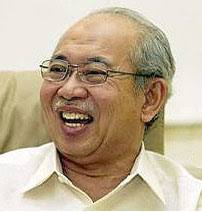
"This was clear when Tun Ghafar Baba (left) and I were challenged," he said referring to his slim victory in the 1986 Umno elections in which the two men defeated by a slim margin Tengku Razaleigh Hamzah (center) and Tun Musa Hitam (right).

He said that was the reason why a new system was introduced in which each nomination for the top posts received bonus votes.

Later on, he said a minimum requirement, or quota, was introduced in which candidates had to receive a certain number of votes before they are allowed to get on the starting block.

He said it is clear that even the current quota system has not been successful in getting rid of vote-buying.

If leaders known for engaging in money politics are elected into office it will lead to Umno's defeat in the next general election.

"The public knows who they are even though it is hard to prove they are paying for votes," he said.

Monday, November 24, 2008

Can Dr Mahathir cure Umno of money politics?

Business Times Singapore
Monday, 24 November 2008 10:06

There is considerable irony is his threat. It was under his 22-year tenure that corruption flourished and took root within the party. Dr Mahathir tried with words to root it out - scolding, cajoling, imploring, begging, even crying on occasion. He would have been better served by coming down hard on offenders, using some of his formidable powers that he amassed when he was premier.

Umno has already nominated the candidates who will contest party elections for every post from the deputy president downwards. Unfortunately, there's more than four months of campaigning before the actual polls itself.

The reason for the delay is Prime Minister Datuk Seri Abdullah Ahmad Badawi. Abdullah has declined nominations for the Umno presidency but he still wants to be Prime Minister until March so the party's supreme council, not without reservations, postponed the polls to that month while allowing nominations to begin in September.

Deputy Prime Minister Datuk Seri Najib Razak is already premier-elect because no one secured enough nominations to challenge him for the presidency. But there are fights everywhere else with three candidates jostling for the deputy presidency; eight for the three vice-presidential posts; and contests for both the head of the Youth and Women's wings - unseen in Umno for a long, long time.

Some might say that this is a healthy development for a political party that claims to champion democracy. But this is Umno - where money politics has been on the rise since the late 1980s. The fear is that a successful candidate may actually have been the best that money can buy and it is a concern that is grounded in not inconsiderable evidence.

Most of the evidence is anecdotal but it is widely believed. Tengku Ahmad Rithauddeen, a former foreign minister and current head of the party's disciplinary committee, has labelled the party "sick" and in need of "strong medication".

Former Prime Minister Tun Dr Mahathir Mohamad thinks that he knows the medication required. Writing in his blog last week, Dr Mahathir threatened to publicly reveal the people whom he alleges are involved in money politics.

There is considerable irony is his threat. It was under his 22-year tenure that corruption flourished and took root within the party. Dr Mahathir tried with words to root it out - scolding, cajoling, imploring, begging, even crying on occasion. He would have been better served by coming down hard on offenders, using some of his formidable powers that he amassed when he was premier.

Be that as it may, Dr Mahathir, 82, is now fed up and thinks that the time is ripe for stern action. He has proposed to do several things. He said that all reports on money politics submitted to him would be forwarded to the Umno disciplinary committee and the Anti-Corruption Agency. "If these two means are futile, I will reveal the names of those involved together with reports in my blog," he wrote.

Dr Mahathir has already endorsed both Najib and International Trade Minister and Umno vice-president Tan Sri Muhyiddin Yassin for Umno president and deputy respectively. But Muhyiddin faces a two-cornered challenge from Malacca Chief Minister Datuk Ali Rustam and Land and Regional Development Minister Tan Sri Muhammad Muhammad Taib. Both are candidates whom Dr Mahathir scornfully described as "jokers" before they received enough nominations to qualify as aspirants to the post of deputy president.

His appraisal of them didn't stop them from receiving quite decent support for a deputy presidential bid. Truth be told, there are no lack of stories about most aspirants - except Najib, who does not have to - judiciously using money to help their causes.

There is only one thing wrong with the former premier's threat. He is an interested party as his youngest son Datuk Mukhriz Mahathir is among three candidates eyeing the Umno Youth chief's post. So he will have to be seen as impartial and come out with everything he knows or risk a backlash with those he named pointing fingers elsewhere.

That could be a disaster for a party that's trying to regroup and re-invent itself for the future. But that's just the talk. There has been no corresponding walk and Umno has shown no desire to change. Who knows? Dr Mahathir's "surgery" may be just what the doctor ordered.

Saturday, November 15, 2008

Dr M: Pak Lah to blame for corruption and cronyism in Umno


By Shannon Teoh

KUALA LUMPUR, Nov 14 - Former Prime Minister Tun Dr Mahathir Mohamed today blamed Prime Minister Datuk Seri Abdullah Badawi for the corruption which he says is rife in Umno.

He said the new Umno leadership would have to work hard to repair what he described as the damages inflicted on the country by Datuk Seri Abdullah Ahmad Badawi's administration.

Dr Mahathir, who has been increasingly vocal in recent weeks, repeated his contention that Barisan Nasional's (BN) current weak position is largely the fault of Abdullah.

Writing in his popular chedet.com blog today, he defended his own administration and leadership, pointing out that even when Umno was extremely unpopular in 1999, BN managed to retain its two-thirds majority in Parliament.

"Umno leaders must now meet as many Umno members and voters as possible to hear their

complaints," he said, naming the economic downturn, inflation, lack of employment and contracts for small contractors as matters that Datuk Seri Najib Razak, as Abdullah's successor, must pay attention to.

He said that cronyism and corruption became rife under Abdullah.

"This was so because even Abdullah was seen to abuse his position and power to help his son and son-in-law's businesses," he stated, referring to such companies as Scomi, in which his son Kamaluddin Abdullah is involved in and ECM Libra, which his son-in-law Khairy Jamaluddin is linked to.

"Everyone knows about the RM200 given to delegates to the Kubang Pasu division so that they did not vote me to be a delegate at the 2006 Umno General Assembly," Mahathir said.

He added also that a Petaling Jaya Selatan leader as well as a veteran leader had reported that Abdullah had given RM 200 and other gifts to branch members and treated them to a stay in a luxury hotel in exchange for support of his 2010 transition plan.

"It is clear that corruption has become part of Umno culture at all levels. This will cause Umno to lose the confidence of the people.

"If Umno under Najib wants the support of voters, it must stamp out corruption. If not, voters will vote whoever pays them off and this includes the opposition," he warned.

Mahathir, who was Prime Minister for 22 years, rebutted any assertion that Abdullah had inherited a damaged Barisan Nasional.

"If so, then why did BN gain two-thirds majority since 1974? BN has never failed to rule Kedah, Perak and Selangor and since Gerakan joined BN, it has never lost Penang," he reasoned.

He further stated that Abdullah had succeeded him in Oct 2003 and in five months, won big at the 11th General Elections with 90 per cent of MPs from the ruling coalition and took back Terengganu as well as nearly regaining Kelantan from Pas.

"This shows that the BN he inherited was very healthy," Mahathir concluded and added that the Permatang Pauh by-election was further proof as "members were afraid to wear the badge and shirts of Umno or BN."

Friday, October 31, 2008

Zaid says racialist social contract a 1980s Umno creation


KUALA LUMPUR, Oct 31 — If at all there was a social contract between the Malays and non-Malays before independence, it was the guarantee of equality and the promise of the rule of law, said former de facto Law Minister Datuk Zaid Ibrahim.

Offering his take on an issue that has been at the core of a roiling debate in the country, he said that the more racialist social contract — which places more emphasis on Malay primacy — was a product of Umno ideologues in the 1980s.

He believed that on the eve of independence, one of the elements which gave Alliance leaders and all Malayans confidence was the knowledge that "a constitutional arrangement that accorded full respect and dignity for each and every Malayan, entrenched the rule of law and established a democratic framework for government had been put in place.''

The Federal Constitution, he noted, was crafted by brilliant jurists who understood the hearts of minds of those who would call this nation their home and whose children would call it their motherland.

"Hundreds of hours of meetings with representatives of all quarters resulted in a unique written constitution that cemented a compact between nine sultanates and former crown territories, '' he said.

This compact honoured the Malay Rulers, Islam, the special status of the Malays, and created an environment for the harmonious and equal coexistence of all communities through the guarantee of freedoms, he noted in a speech at the Lawasia conference today.

This social contract was unilaterally restructured in the 1980s by "a certain segment of the BN leadership that allowed for developments that have resulted in our current state of affairs,'' said Zaid.

"The non-Malay BN component parties were perceived by Umno to be weak and in no position to exert influence. Bandied about by Umno ideologues, the social contract took on a different, more racialist tone. The essence of its reconstructed meaning was this: that Malaya is primarily the home of the Malays, and that the non-Malays should acknowledge that primacy by showing deference to the Malays and Malay issues. Also, Malay interest and consent must be allowed to set the terms for the definition and exercise of non-Malay citizenship and political rights. This marked the advent of Ketuanan Melayu or, in English, Malay Supremacy.

"Affirmative action and special status became a matter of privilege by reference to race rather than of need and questioning of this new status quo was not to be tolerated.

"The new political philosophy in which the primacy of Malay interests was for all purposes and intents the raison d'être of government naturally led to interference with key institutions, '' he said.

He urged the Barisan Nasional government to abandon the reworked concept of the social contract and embrace "a fresh perspective borne out of discussions and agreements made in good faith with all the communities in this country.''

In his speech, Zaid also touched on:

• Democracy, the rule of law and Umno

"Mukhriz Mahathir will probably be the new Umno Youth leader. In saying as he did recently that there is no need for law and judicial reforms as it will not benefit the Malays, he typifies what is perceived as the kind of Umno leader who appeals to the right wing of Malay polity.

"That he may be right is sad as it leads to the ossification of values that will only work against the interests of the party and the nation. This type of thinking may pave the way to a suggestion in the future that we may as well do away with general elections altogether as they may not be good for the Malays. We are a deeply divided nation, adrift for our having abandoned democratic traditions and the rule of law in favour of a political ideology that serves no one save those who rule.''

• The transition to democracy in Indonesia

"The majority of Indonesians have embraced democracy, religious tolerance, and religious pluralism. In addition, a vibrant civil society has initiated public discussions on the nature of democracy, the separation of religion and state, women's rights, and human rights more generally. These developments have contributed to a gradual improvement in conditions for human rights, including religious freedom, over the past few years. Since 2003, Indonesia has also overtaken Malaysia on the Reporters sans Fronteres Press Freedom Index, moving up from 110th place to 100th out of 169 countries covered. Malaysia on the other hand has dropped from 104th place to 124th place in the same period. I am not surprised. In 1999, Indonesia passed a new press law that, in repealing two previous Suharto administration laws, guaranteed free press through the introduction of crucial measures. Progress has not stopped there. On April 3 this year, Indonesia passed its Freedom of Information Act. This latest law allows Indonesia's bureaucracy to be open to public scrutiny and compels government bodies to disclose information.''

• Nation building

"We have failed miserably in dealing with complex issues of society by resorting to a political culture of promoting fear and division amongst the people. The Ketuanan Melayu model has failed. It has resulted in waste of crucial resources, energy and time and has distracted from the real issues confronting the country. The obsession with the Ketuanan Melayu doctrine has in fact destroyed something precious in us. It makes us lose our sense of balance and fairness.”

• Malays and modernity

"Dr Mahathir was right to ask that Malays embrace modernity. He fell short of what we needed by focusing on the physical aspects of modernity. He was mistaken to think all that was needed to change the Malay mindset was science and technology. He should have also promoted the values of freedom, human rights and the respect of the law.”

• The Judiciary

"The courts must act with courage to protect the constitutionally-guaranteed rights of all citizens, even if to do so were to invoke the wrath of the government of the day. In PP vs Koh Wah Kuan (2007), a majority bench of the Federal Court chose to discard the doctrine of separation of powers as underlying the Federal Constitution apparently because the doctrine is not expressly provided for in the Constitution. This conclusion is mystifying as surely the court recognises that power corrupts absolutely and can thus be abused. If the courts are not about to intervene against such excesses who is? Checks and balance are what the separation of powers is about. Surely the apex court is not saying that the courts do not play a vital role in that regard?

"The rule of law has no meaning if judges, especially apex court judges, are not prepared to enter the fray in the struggle for the preservation of human rights and the fundamental liberties. To all our judges I say discard your political leanings and philosophy. Stick to justice in accordance with the law. - The Malaysian Insider

Wednesday, October 22, 2008

The social-contract/constitution equivalency


By Tricia Yeoh
editor@thenutgraph.com

First Conference of Rulers in Kuala Kangsar, 1897 (Public domain)

LAST week, the Conference of Rulers issued a much-publicised statement. The statement reiterated the special position of the Malay rulers, Islam, the Malay language, and the genuine interests of other communities as enshrined in the Federal Constitution. The rulers reminded Malaysians that it is not proper to dispute the provisions of the Federal Constitution.

Many have pondered the significance of the statement's issuance, since it comes immediately following a series of incidents that increasingly tug at Malaysia's inter-ethnic fabric.

There was the decision by the Home Ministry to declare Hindu Rights Action Force (Hindraf) an illegal organisation.

And then there is the continuing showdown between Seputeh Member of Parliament Teresa Kok and Malay-language daily Utusan Malaysia. Both parties are at psychological war with the other, although Kok was never proven guilty over the so-called azan debacle, which started the face-off.

Most recently, the daily published a fictional story about the murder of a Chinese woman politician, a character which many believe alludes to Kok (even though its author has denied any correlation).
Multiple interpretations

The rulers' statement, just as the constitution on which it is based, is likely to be interpreted differently by various quarters. Barisan Nasional leaders welcomed the assurance that all communities in Malaysia are treated fairly.

However, due to the timing of the statement, it could also be interpreted as a convenient legitimisation of the more racist factions within Umno. It could lead to an even more aggressive defence of the ketuanan Melayu (Malay supremacy) discourse.

The statement also comes at a time when Deputy Prime Minister Datuk Seri Najib Razak is almost assured of his ascent as Prime Minister come March 2009, barely five months away. And memories of his 1987 statement, that he would bathe the keris with Chinese blood, are still fresh for many Malaysians. One can only hope he has changed his sentiments in that regard.

On the other hand, the contents of the rulers' statement were not all that surprising, really. Some might say it was a chilling warning sent to all citizens that the social contract should not be challenged. However, the rulers also emphasised that "all provisions in the Federal Constitution" are "known as the social contract". This gives new meaning to the idea of a social contract.

In recent public discussions, politicians have only assumed it to be the exchange of Malay rights for non-Malay citizenship. But according to the rulers' definition, the entire constitution is the contract between state and citizen.

(Mis)understanding history

The debate about the position of the Malays should therefore be interpreted in light of the constitution as a whole. It is true that Article 153 highlights the special position of Malays, natives of Sabah and Sarawak, and the legitimate interests of other communities. However, it should also be read alongside Article 8, which guarantees equality before the law regardless of religion, race, descent, or place of birth.

I also find this sentence in the statement utterly intriguing: "Among the reasons identified for these [misunderstandings] ... is the cursory knowledge of those concerned regarding the historical background as to why these provisions were enshrined in the Federal Constitution, and the influence of their attempts to implicate the principles of impartiality and justice without regard for the historical background and social condition of this country."

It is unclear whether the rulers were chastising those who have questioned the social contract, or "Malay leaders" who have retaliated. Either way, the rulers seem to be ticking off those who misunderstand history, and those who are impeding upon the principles of impartiality and justice.

Therefore, to clarify a point on history, I quote the Constitutional Commission in developing the Constitution (1956):

"[A] common nationality was the basis upon which a unified Malaysian nation was to be created and that under a democratic form of Government it was inherent that all the citizens of Malaya, irrespective of race, creed or culture, should enjoy certain fundamental rights."

A common nationality seems to have been the rightful objective of the Federal Constitution, which the rulers say is synonymous with the social contract.

Hindraf supporters at opposition leader Datuk Seri Anwar Ibrahim's Aidilfitri open house on 12 Oct 2008

Safeguarding legitimate interests

Furthermore, the rulers' statement actually called on the Malays to "be united to safeguard the ... genuine interests of the other communities in Malaysia as enshrined in the Federal Constitution."

That the interests of other communities are well taken care of is emphasised several times in the statement. Indeed, Article 153 is often cited as the legal basis that protects the special rights of Malays. But the article specifies the "special position", which can be argued as socioeconomic position, of three categories: Malays; natives of Sabah and Sarawak; and legitimate interests of other communities. The latter is often a forgotten category, which is clearly stipulated in Article 153.

One could argue that the plight of the marginalised Indian community, as raised by Hindraf, falls perfectly under the purview of Article 153, too.

Due to the politicisation of race in Malaysia, Article 153 has been considered the be-all, end-all license for race-based affirmative action and ketuanan Melayu. Suflan Shamsuddin, in his book Reset, argues that it is not the article itself that people are disputing today, but rather the wrongful application of it.

If, for example, the government of the day were democratically elected, with sufficient checks and balances, the application of Article 153 would not be in such a mess. There would not be blatant misinterpretation, and there would not be misuse and abuse of a legitimate contract. The arbitrary means of handling the special position of certain communities have led to great distress.

Encourage dialogue

I hardly imagine that ordinary citizens would question the position of the Malay rulers, Islam as religion of the state, and Malay as the national language. Instead, it is those policies considered as racist and discriminatory that many have problems with. Unmitigated ketuanan Melayu has little constitutional basis, after all.

In fact, the New Economic Policy (NEP) was introduced in 1971 to correct socioeconomic imbalances among the different ethnic groups. It was quite a fair policy to begin with, and it certainly was not introduced on the basis of Article 153. To claim that the NEP was formulated on the basis of Article 153 is a retroactive attempt to say the NEP has constitutional grounds. This is a misguided afterthought, and a false argument.

The rulers stressed the need for peace, harmony and mutual respect to maintain order in the country. No Malaysian desires violence, instability and disaster. However, in seeking national unity, there must also be efforts at achieving a genuine peace and harmony that is not based on pretence.

The process of achieving this requires some civil discussion and conversation among all Malaysians. And this should be encouraged, especially among the younger generations who were not present during the formulation of the original social contract. Seeking rational dialogue — even regarding the social contract — is a much better solution than concocting political assassinations in short fiction.

Tricia Yeoh is Director of the Centre for Public Policy Studies. She believes that Article 153 of the Federal Constitution is itself not strong enough a basis to argue for racial supremacy or discriminatory policies.

Sunday, October 19, 2008

THE UNDAUNTED PRINCE


Tengku Razaleigh Hamzah is again trying to achieve his dream of becoming Umno president but with a national agenda in mind. Some say he is pushing his luck; he says he is proving a point.

DRIVING into Gua Musang, one is greeted by a huge banner announcing a religious event at Masjid Razaleigh.

The mosque is named after the constituency’s nine-term MP, Tengku Razaleigh Hamzah, who began representing the expanse of jungle and village settlements way back when the area was known as Ulu Kelantan.

And the area is ulu (remote, with the connotation of backwardness). Gua Musang boasts the largest population of orang asli in Kelantan and they revere him. Razaleigh, in turn, attends to their modest needs and supplies them with bicycles so they can get around.

Razaleigh grew up in a wealthy, political family. His father was Kelantan mentri besar before Merdeka but even as a young man, Razaleigh had his sights on the federal capital.

Now, into the second weekend of the Umno polls, the contest for the party leadership looks like a badly listing ship. Razaleigh has not, to date, received a single nomination.

Conversely, the heir apparent Datuk Seri Najib Tun Razak has already received 43 nominations out the 58 (30% of 191 divisions) required to qualify him for the top post.

Razaleigh and Najib are the only contenders for the helm, and Razaleigh actually threw in his hat first. He had offered himself as the alternative to Prime Minister Datuk Seri Abdullah Ahmad Badawi months before the latter announced he was relinquishing the position to his deputy.

At 71, the dignified, soft-spoken Razaleigh is a generation older than his 55-year-old opponent. There is a yawning gap of experience between him and the outspoken, mostly ambitious division chiefs who are at least 20 to 30 years his junior. But he does not see age as an impediment.

“Age is based on our ability to think,” he said with a smile.

Their old family ties make it just a bit awkward for Najib today to stand against his former mentor. When Razaleigh was managing Petronas, Najib’s father, second prime minister Tun Abdul Razak, had asked Razaleigh to take his son, freshly back with an economics degree after several years’ study in the United Kingdom, under his wing. Najib was told to carry Razaleigh’s briefcase and learn everything he could from him.

In keeping with his old school refinement, he has never hinted, not even in a fleeting, private moment, that Najib, or anyone else, “owed him”.

Now Razaleigh wants to make a point. He wants to remind Umno delegates that demo­cracy is very much a party tradition and the quota system — whereby candidates were required to get a certain number of nominations to qualify to run, plus entitling them to bonus points to boot — was alien to the party spirit. Razaleigh’s repeated attempts to abolish the quota system have failed, however.

If “the purpose of any political party is to win elections”, as Kelantan state Opposition Leader from Kok Lanas Datuk Md Alwi Che Ahmad asserted, then the role of politicians is to lead.

Razaleigh is no exception. He has his ambitions, if tempered by national exigencies. Look­ing at the crop of younger aspirants and their naked ambitions has not been reassuring.

“This time I am forced to come forward because no one else has the courage to stand, especially for the Malays who have no choice,” said Razaleigh.

Quietly, he has been traversing the country to remind people that he is still to be counted.

“Next general election, Umno might be rejected. And the Malays will not have a platform. Some say there is PAS. But PAS’ struggle is different.

“I heard that not only the Malays but even Umno members themselves voted the DAP. We were almost wiped out in the Federal Territory. In Permatang Pauh (by-election), there are 20,000 Umno members but Barisan received only 10,000 votes.”

He holds “the collective leadership, not any single individual leader, responsible”, meaning the Cabinet and the Umno supreme council.

Razaleigh is proud to be a lifetime member of Umno and cannot imagine leaving the party “unless they do something really detrimental to the Malays”.

“I want to democratise the party. The leadership should not have too much power. Mem­bers are now afraid of leaders, whereas it should be the other way round.”

If he were to win the president’s post, he proposed giving members, rather than delegates, the right to vote in the party leadership. He would also propose that the president hold office for not more than three terms, while state liaison chiefs be limited to two terms.

In the spirit of democracy, Razaleigh has declined to name a running mate, leaving that choice to party delegates.

Final chance

This is Razaleigh’s final stab at the top party post — and by extension the prime minister’s job. He challenged (Tun) Dr Mahathir Mohamad in 1987 and famously lost by 43 votes. According to sources close to him, Razaleigh had banked on Najib’s support but some time that day, Najib had had a change of heart.

“When I was not chosen, I backed down,” Razaleigh said simply. The quota system was introduced after that divisive party polls.

In 2004, only Gua Musang had nominated him and Razaleigh became ineligible to run for party president.

Razaleigh is an astute, experienced politician. But his palace background limits his combat in action. Uncle to the Sultan and Raja Perempuan of Kelantan, Razaleigh is fasti­dious about maintaining his princely stature.

In fact, it has become second nature to him, even in his short-sleeved cotton-shirted days when as Semangat ‘46 president he had consorted with the opposition in the Barisan Alternatif. Wallowing in the mud fighting for party positions is beneath him.

He admitted, after just a whisper of hesitation “on a Friday, so I can’t lie” to having held discussions with the Pakatan Rakyat “on general matters” without getting into the speci­fics of posts and positions. It was they who had approached him, he said.

“I was happy to talk to them to know their plans and they met me to get my views.”

In the current political whirlwind, Razaleigh has been the only candidate to offer an alternative blueprint for the Barisan Nasional’s continued survival. He suggested a single, expanded multi-racial party to which individuals could directly subscribe.

Just as Abdul Razak had formed a unifying coalition in the Barisan Nasional in 1974, after having suffered at the polls in 1969, so too, he felt, it was time for a fresh direction after the ravages of the March 8 general election.

“We must open doors so individuals can join,” said Razaleigh, although conceding that for now “it’s just a proposal which may not materialise”.

That idea was picked up by Abdullah and announced at the Gerakan assembly. Non-Malays lauded the proposal for direct membership to the coalition and an instant TV3 short-messaging service (SMS) poll showed that more than 70% of respondents supported the idea.

The proposal echoed a similar suggestion by Umno founder Datuk Onn Jaafar in the years before Merdeka. But Umno at that time was not ready.

Apparently, today it still is not prepared to accept such a drastic policy change. A clutch of Umno leaders promptly responded that it was premature and that Umno still had a role to play.

Obviously if Malaysians could subscribe directly to the Barisan, the individual component parties would become irrelevant. On such a level playing field, the Malays in parti­cular would feel threatened that their tacit privileged position in Malaysian politics would be eroded.

With such sentiments gripping Umno in the months leading up to its March party election, the idea dissipated as quickly as it was floated. It was, however, an idea very much in keeping with the country’s current mood, as proven by Anwar’s winning of Malaysian multi-racial hearts.

Anwar has dominated these past few months on the political roller-coaster.

“He called the shots,” said a blogger aligned to the maverick figure.

Abdullah’s untimely departure from the national stage was hastened by Umno’s fears that Anwar was imminently to form an alternative government. Meanwhile, the Umno grassroots were restless and the supreme council was unable to keep their own ambitions in check.

Nevertheless, the blogger does not think that Anwar can now pull it off. “The moment has passed,” he said reflectively of Anwar’s initial deadline to form a new government on Sept 16.

A man to respect

If Razaleigh harbours any personal agenda, apart from wanting to rescue the battered economy, it is just to prove that he can do it.

Before Abdul Razak died, he had called seven people to his bedside, including Dr Mahathir, (Tun) Musa Hitam and Razaleigh, recounted Alwi.

Razak had told them: “My successor will be from among you all. Take turns according to seniority.”

Razaleigh held by that. So after Dr Mahathir, it should have been Razaleigh, then Musa, said Alwi, the Prime Minister’s political secretary.

Now Razaleigh “wants to tell the public Umno is a democratic party where you can challenge anybody if you have the credibility. So he wants to give that option. It is not a question of him winning, getting nominations,” explained Alwi.

To him, Razaleigh’s credibility does not stem from his royal roots — which do count in Kelantan — but from his experience and stature.

“He has the stature of Dr Mahathir and Musa. He is of that generation, not ours. We cannot reach his level of thinking. That’s why we must think of him as a statesman and don’t fight him, (but) listen to his advice,” Alwi said.

The theoretically logical solution earlier mooted by some that Razaleigh become president and Najib his deputy, at least for a term until things cooled down politically, has received lukewarm response.

“Of course, he’s out of place. Out of time, out of place. But you can use his talent, his stature to strengthen Umno. Razaleigh is such a personality. He must be respected,” said Alwi.

Those who have given up on Razaleigh’s prospects must understand that generational factor, he added.

“As Pak Lah said: Umno doesn’t understand Pak Lah; Umno doesn’t understand Razaleigh. They come from that first generation. And Umno now is not that generation.”


Thursday, October 16, 2008

Idris Jala Receives Excellence In Leadership Award From Frost & Sullivan


KUALA LUMPUR, Oct 16 (Bernama) -- MAS managing director and chief executive officer Datuk Seri Idris Jala has been honoured with "Excellence in Leadership Award by Frost & Sullivan, a leading strategic market consulting and training services provider.

"I am honoured to receive this award. However, this award belongs to the entire team at Malaysia Airlines. Without their support and cooperation, I would not have been able to achieve the successful turnaround of Malaysia Airlines," he said in a statement.

Idris was the sole recipient from the aviation industry to receive an award at the Frost & Sullivan awards ceremony at Mandarin Oriental Hotel Wednesday.

MAS Chairman Tan Sri Dr Munir Majid said the award recognises Idris as an individual who has made significant impact through his excellence in leadership, innovation in decision-making, implementation of strategies and accomplishments in driving the turnaround of Malaysia Airlines.

"His compelling and inspirational leadership have won the respect of all of us within the company, industry and the general public. We are proud of him and he has our whole-hearted and continued support of his leadership as we march forward with our Business Transformation Plan," he added.

Idris was appointed managing director and chief executive officer in December 2005 in the aftermath of the national carrier's biggest financial loss in its corporate history.

In February 2006, he announced the airline’s Business Turnaround Plan (BTP).

From a nine-month loss of RM1.3 billion in 2005, he managed to turnaround the airline in less than two years.

The airline registered a record RM851 million in net profit in 2007.

Building upon its successful BTP, Idris announced Malaysia Airlines' five-year Business Transformation Plan Two in January aimed at achieving RM1.5 billion annual profit by 2012. -- BERNAMA

MIER says growth to fall from 5.3% in 2008 to 3.4% next year


KUALA LUMPUR, Oct 16 — While optimistically predicting Malaysia's economic to grow 5.3 percent for 2008, the Malaysian Institute of Economic Research (MIER) today forecasted the Gross Domestic Product (GDP) growth will contract to 3.4 percent in 2009 due to a gloomy global outlook.

MIER executive director Datuk Dr Mohamed Arif Abdul Kareem said it adjusted the GDP growth from 4.6 percent to 5.3 percent for 2008 due to the higher-than-expected domestic growth during the first half of this year and the resilient US economy earlier this year

However, Bernama reported that he cautioned it was likely that growth would deteriorate late this year as the Malaysian economy was taking a hit from the knock-on effects of a flagging global economy.

He added that the United States had managed to post a good performance in the second quarter of 2008, delaying a severe slowdown thanks to tax rebates, a stronger dollar and cut in interest rates.

According to him, Malaysia may experience a technical recession in 2009 or two consecutive contractions, “probably in the second and third quarter”. Mohamed Arif said indications also pointed to the Malaysian economy facing a “strong headwind” in the coming years.

“It is not something that we saw in 1997/98 Asian financial crisis where it saw sharp contractions and sharp recovery,” he said, adding MIER had revised the 2009 outlook to 3.4 percent from 5.0 percent earlier.

“The effect will be milder this time but it's going to last longer. We will not experience a growth contraction of 7.4 percent this time around,” he added.

Mohamed Arif said the economy should be back on track to growth trajectory in 2011 and until then “we will see sluggish growth as we have to wait others to recover as well”.

However, he said that Malaysia's fundamentals were generally good except the budget deficit.

“Budget deficit this year will exceed five percent of GDP and exceed four percent next year,” he said, adding that the expected widening of deficit was due to lower government revenue as crude oil prices came down to US$70 per barrel.

He also said that the 2009 Budget had envisaged the oil price at US$125 per barrel with the oil earnings contributing about 40 percent to the government revenue.

According to Mohamed Arif, the Malaysian economy is also one of the better ones in the region.

“It is in the sense that macroeconomy has been good, the financial sector is fairly stable and we continue to record current account surpluses. We are in a better position to weather the storm compared to others but we cannot take things for granted,” he said.

On the ringgit, MIER was of the view that the local unit was still undervalued though in weakening mode.

“The ringgit is weakening partly because the US dollar is strengthening. Ironically, the dollar is strengthening amid a weak economy. One salient explanation is that the US is continuing its borrowings. Capital is still flowing from the US, thus pushing up demand for the dollar,” Mohamed Arif said.

“We dont think the ringgit will go back to the three ringgit to a dollar as we have forecast earlier. The ringgit will strengthen as the dollar adjusts downwards. It may hit its low of 3.6 and settle around 3.3 or 3.4 next year,” he said.

On the interest rate, Mohamed Arif said that MIER did not rule out the possibility of the government revising downward the rate early next year.

“It is not going to be large. It could be 25 basis points. It is likely to happen in line with moderate inflation,” he said.

Regarding the political scene, Mohamed Arif said long-term investors were not disturbed by the current political development amid slower economic growth though “one may coincide the other and compound the difficulties”.

“They said we are heading in the right direction, political speaking. Malaysia is more mature, going for the dual party system. It is music to the ears because it can ensure good governance, transparency and accountability,” he said.

According to Mohamed Arif, MIER is worried about the secondary impact of the US recession as China's economy is not immune.

“There are already indications that China is beginning to feel the pinch.

If China doesnt export as much as before, our exports will also be affected. We cannot take this lightly,” he said.

He also said that the global rescue package would only provide some relief but it could not really prevent a recession. - Bernama

Bank Of America


Illustrations: The Art of David Dees